
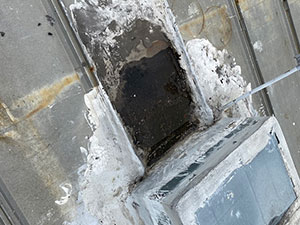
For a commercial building in Jamestown, ND, the first roofing repair question is whether the problem is a localized defect that a targeted repair can fix or a sign of damage that needs a broader roof assessment. A single failed seam or flashing detail is a different problem from moisture spread through the insulation, and the repair scope should follow what the evidence shows. Eagle Eye Roofing Systems provides commercial roofing repair for Jamestown buildings, and this guide explains how to tell the two situations apart.
For help evaluating repair needs in Jamestown, contact Eagle Eye Roofing Systems at (701) 202-7280. A repair proposal should explain what was found, which areas are covered and what further investigation may be necessary.
The Real Cost of Ignoring Minor Roof Damage
A small leak or puncture is easy to overlook when operations are not affected. Left alone, water can keep moving through the roof system, and the results can include:
- Interior water damage and mold growth
- Wet or deteriorating insulation
- Damage to the roof deck and other components
- Loss of heating efficiency where insulation is wet
- A repair that grows into a much larger project
Early evaluation may limit the amount of damage that needs attention, but the cost and appropriate timing depend on the roof and the defect. The point is not that every defect is urgent, but that a defect should be located, documented, and either repaired or monitored on purpose.
How Quality Roofing Repair Extends Lifespan
A roof repair is more likely to perform as intended when it addresses the defect and uses methods compatible with the existing materials. Four things drive that outcome:
Finding the real source. Water may enter at one location and appear elsewhere, so a visible stain is a starting point, not a diagnosis. A roof leak detection assessment or a commercial roof inspection in Jamestown can help identify likely entry points and determine whether further investigation is required.
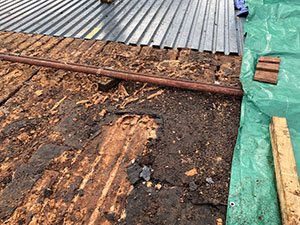
Matching the repair to the system. TPO, EPDM, modified bitumen, and metal roofs need different repair methods and compatible materials. A repair that works on one system can fail on another.
Limiting the work to what is needed. A defined repair scope addresses the defect while retaining surrounding components that remain serviceable. Wet insulation or damaged decking may need separate repair rather than being covered over.
Checking warranty terms first. If the roof is under a manufacturer or installer warranty, ask what repairs are allowed and who may perform them before work starts, since some terms depend on how repairs are done.
Localized Repair or Broader Assessment?
The table below shows common symptoms, the evidence an inspection should gather, and what that evidence usually points to. It is a guide for conversations with a contractor, not a diagnosis, and the right answer depends on the findings for your roof.
| What you notice | What the inspection should confirm | What it usually points to |
|---|---|---|
| Open or separated seam | Seam assessment and photos showing whether the separation is limited to one area or repeats along other seams | A localized seam repair is reasonable if the surrounding membrane is sound; widespread separation calls for a broader assessment |
| Leak at a penetration | Condition of the flashing, boot, or sealant, and whether water has reached the insulation around it | Repair of that detail if the surrounding insulation is dry; wider work if moisture has spread |
| Damaged or lifted flashing | Fastening, sealant, and substrate condition along the whole flashing run, not only the visible gap | Repair of the affected run, or a broader scope if the substrate or other runs are failing |
| Ceiling stain inside | A roof-side investigation, since the stain may be far from the source; moisture scan or core samples where appropriate | No repair scope until the source is located; a stain alone does not show what is wet |
| Ponding water | Whether the cause is slope, a blocked or poorly placed drain, or membrane sag | Drain or detail correction if isolated; a bigger drainage question if water collects across the roof |
| Blistering or surface cracking | Whether blisters are small and dry or trap moisture, and how much of the membrane is affected | System-compatible localized treatment where suitable; broader assessment if deterioration is widespread |
Localized repair has limits. If the same area keeps leaking after repair, if investigation confirms extensive wet insulation, or if the membrane is failing in many places, a broader assessment is needed before more money goes into patches. The roof should be examined by trained people with proper safety equipment, so owners and staff should not climb onto a roof to check these items themselves.
Commercial Roofing Repair Services
Roofs in Jamestown face harsh winters, temperature swings, and wind, which stress seams, flashing, and drains. Eagle Eye Roofing Systems provides commercial roofing repair services. The appropriate work depends on whether storm exposure, age-related wear, equipment activity or another cause has affected the roof. If damage followed a storm, a storm damage assessment may help document the affected areas. Eagle Eye also lists other roofing services for commercial buildings.
What a Repair Quote Should Include
Ask for a written scope so you can compare quotes fairly:
- The location and cause of each defect, ideally with dated photos
- The repair method and materials, and why they suit your roof system
- Whether surrounding areas will be checked for moisture or damage
- How wet insulation or damaged decking will be handled if found, and how extra work is priced
- Access and safety plans, including roof access routes, rooftop equipment, and how tenants and customers are protected
- Weather limits for the materials and what happens if conditions delay the work
- A closeout record showing what was repaired
To schedule a commercial roof inspection in Jamestown, ND, call Eagle Eye Roofing Systems at (701) 202-7280.
Frequently Asked Questions
How can I tell if my commercial roof needs repair?
Leaks, ceiling stains, bubbling membrane, clogged drains, and damaged flashing are common signs. Because a stain may be far from the source, have the roof inspected before deciding on a repair scope.
Are roof repairs a long-term solution or a temporary fix?
It depends on the cause and the roof’s condition. A compatible repair may provide durable service where nearby materials are sound, while repeated repairs on a deteriorating roof may only delay a broader decision.
Can repairs be done in cold weather?
Sometimes. Many materials have temperature and moisture limits, so ask what products will be used and whether a temporary repair is planned until conditions allow a permanent one.
When should I ask for a broader roof assessment instead of another repair?
Ask when leaks keep returning, investigation confirms extensive wet insulation, or damage appears in many places. A broader assessment shows whether further repairs make sense.