
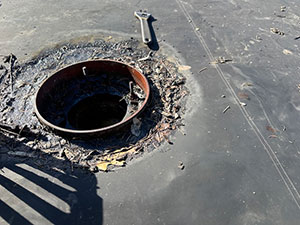
For commercial property owners in Jamestown, ND, a roof leak is more than a nuisance. It can threaten the building, interrupt operations and add repair costs. Roof leak detection is the work of finding where water is entering and why, and the most useful result is not just a repaired spot but a clear record that tells the owner what to do next. Eagle Eye Roofing Systems provides general commercial roofing in North Dakota.
This article explains why detection matters on a commercial roof, how leaks are traced, and what evidence an owner should receive afterward to decide on maintenance, repair or replacement. To discuss a Jamestown building, you can reach the team at (701) 202-7280.
The Critical Role of Roof Leak Detection
Early Detection Can Limit Damage
Commercial roofs are built to last, but even durable materials wear over time, and North Dakota’s snow accumulation, freeze and thaw cycles and summer storms add steady stress. Cracks, membrane separation and flashing failure let water in, and when the water goes undetected it can wet insulation, weaken the deck and shorten the life of the roof.
Regular roof reviews can help identify minor vulnerabilities before they become major repairs. Depending on the roof and conditions, an investigation can include examination of seams, flashings, penetrations and drains. Other tests, including moisture readings or thermal imaging, are possible only where appropriate and actually available from the selected provider. Finding the opening early can sometimes limit the affected area, though it does not by itself guarantee a longer roof life. A leak may involve more than one entry point, so nearby details also deserve review.
Why the Source Is Rarely Where the Water Shows
Water follows the roof surface, insulation, deck seams and ductwork before it appears inside, so a stain on a ceiling tile may be some distance from the opening. A single unnoticed leak can damage inventory, compromise insulation and create slip or electrical hazards. That is why detection means tracing the path of water, not patching the spot below the stain.
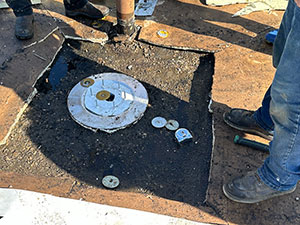
The Cost of Waiting
Ignoring a minor leak can increase repair costs, lead to interior restoration expenses, and complicate warranty or insurance questions. How a particular warranty or policy treats a leak depends on its terms, so it is worth reading them. Regular detection and prompt mitigation help avoid emergency repairs, but savings vary by building and should not be assumed.
What Evidence Should the Owner Receive?
The end product of a leak investigation should be a written report the owner can act on. The table outlines a sample structure. Not every visit will include every item, but each section answers a question the owner will need to answer later.
| Report section | What it should contain | How the owner uses it |
|---|---|---|
| Scope and conditions | Date, roof areas covered, areas not accessible, weather and recent rain or snow, and the method used for each area. | Shows what was and was not checked, so a clean result is not read as a guarantee for the whole roof. |
| Dated photos | Dated photos of each finding with a wide view and a close view, tied to a numbered location. | Gives a record to compare against at the next visit and to share with the building team or insurer. |
| Defect locations | A roof sketch or plan marking each defect, penetration, drain and seam, with the nearest interior leak location. | Water often travels, so the interior stain and the roof opening may be far apart. |
| Moisture findings and limits | What moisture readings, thermal images or visual signs were found, how they were confirmed, and what could not be confirmed. | Separates confirmed wet areas from suspected ones, and shows where more testing is needed. |
| Prioritized actions | Findings ranked as urgent, near-term or monitor, each with a recommended action such as sealing, flashing repair or further investigation. | Lets the owner schedule work in order of risk and budget. |
| Reinspection triggers | Conditions that call for another visit, such as after a major storm, after repairs, or when a monitored area changes. | Turns a one-time visit into a plan for follow-up. |
When Thermal Findings Need Confirmation
Thermal images show temperature differences, and those differences can come from wet insulation, but also from shade, roof color, ballast, equipment or recent sun. For that reason a thermal finding is a lead, not a conclusion. It should be confirmed with another method, such as moisture readings, a carefully located test opening, suitable moisture testing or closer inspection, before the report treats the area as wet. The report should distinguish a confirmed defect from a thermal anomaly that still requires investigation. Testing methods and destructive sampling, if any, should be agreed before they are carried out.
Who Receives the Report and How It Informs an Estimate
The report should go to the person who makes roof decisions, such as the owner or property manager, and can be shared with maintenance staff, tenants or an insurer when needed. Because each finding has a location, photo and priority, it can be turned into a scoped estimate: a repair list for defined defects, a maintenance plan for items to monitor, or a recommendation to look at replacement when moisture is widespread. A commercial roof inspection in Jamestown or a defined roofing repair in Jamestown can follow directly from those findings.
When the Evidence Does Not Yet Identify the Leak
A report can identify a likely source without proving that every leak path has been found. If ceiling stains continue after the first repair, compare the dates and locations against rainfall, HVAC operation and earlier roof findings. It may be necessary to expand the checked roof area or inspect adjoining walls, equipment curbs and drainage connections. The next proposal should identify the unresolved question and the additional examination required, rather than treating an incomplete diagnosis as a confirmed repair.
How Often Should Detection Happen?
There is no single schedule for every building. A regular inspection schedule may include spring or fall visits and checks after severe weather; frequency should follow the roof system, condition and any applicable maintenance requirements. Roofs near the end of their service life, with many penetrations or with a history of leaks, may justify more frequent checks. The reinspection triggers in the report help set the schedule for the specific roof.
Leak Detection Specialists
Local weather and building conditions affect how a roof ages, and flat, low-slope and metal roofs each have their own common failure points, such as seams, flashings, penetrations and drains. When choosing a provider, ask what areas will be covered, which methods will be used and what you will receive afterward. Eagle Eye Roofing Systems can be reached at (701) 202-7280 to talk through a Jamestown commercial roof.
Frequently Asked Questions
What are common signs that my commercial roof has a hidden leak?
Stained ceilings, musty odors, bubbling paint and unexplained moisture are common signs. They often appear well after the leak starts and away from the opening.
How often should I schedule roof leak detection?
The appropriate interval depends on the roof, its history and maintenance requirements. New symptoms or severe weather can justify a visit sooner than the next planned check.
Can leak detection be done without disrupting my operations?
Much of the work is done on the roof, so disruption can be limited, but interior access may be needed to trace a stain or check ceilings. Confirm the plan in advance.
What should I receive after a leak investigation?
A written report with dated photos, marked defect locations, moisture findings and their limits, prioritized actions and reinspection triggers, so you can decide on maintenance, repair or replacement.