
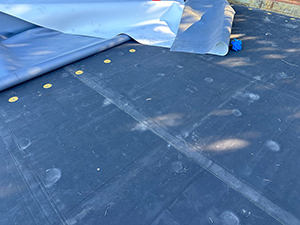
For a commercial building in Williston, ND, the roof replacement decision should come from the condition of the existing roof, not from age or one visible leak alone. Repeated failures, wider moisture, damaged insulation or decking, unresolved drainage, and storm damage can all change whether another repair is practical. Eagle Eye Roofing Systems provides commercial roofing in Williston, and this guide explains what an owner should confirm before authorizing replacement and how to plan the work around an occupied building.
Call Eagle Eye Roofing Systems at (701) 202-7280 to discuss the roof condition and the replacement scope being considered.
Commercial Roof Replacement Overview
A commercial roof replacement removes some or all of the existing roof assembly and installs a new system designed for the building. In some projects, a recover may be considered instead of complete tear-off, but that decision depends on the existing layers, moisture condition, deck and insulation, attachment requirements, drainage, project design, and applicable system or code requirements. It should not be assumed from surface appearance alone.
A useful written replacement scope should explain:
- Tear-off or recover: what existing materials remain and what evidence supports that approach.
- Deck and insulation: what is known before work starts and how concealed wet, deteriorated, or unsuitable materials will be handled.
- New roof assembly: the actual system selected for the building, including insulation, attachment, membrane or roof covering, and other project-specific components.
- Flashing and drainage: how edges, penetrations, rooftop units, drains, scuppers, and other transitions are included.
- Closeout: what completion review and project documentation the owner receives.
Roof Replacement Signs
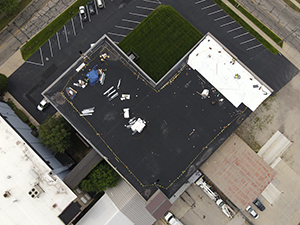
Replacement becomes a stronger consideration when failures are no longer isolated. Warning signs can include leaks in several areas, repeated repairs that do not resolve the problem, widespread membrane or surface deterioration, suspected moisture across a larger portion of the roof, damaged decking, persistent drainage problems, or storm damage that affects multiple roof components. Ponding water is not by itself proof that replacement is required, but the cause should be identified because a new roof should not simply copy an unresolved drainage problem.
Repair or Replacement Checklist
Before authorizing replacement, ask the contractor to answer these questions from the available evidence:
- Are the defects limited to one seam, penetration, flashing detail, or small roof section, or do they recur across multiple areas?
- What evidence supports the suspected moisture extent, and is additional investigation needed before the scope is final?
- Are deck or insulation conditions known, and how will concealed deterioration be documented and priced if discovered?
- Are drainage or slope conditions contributing to the failures, and are corrections included in the replacement design?
- Have previous repairs remained localized, or are new failures appearing in different areas?
- What service life and condition remain in the existing roof compared with the cost and scope of another repair?
If an active leak is part of the decision, roof leak detection in Williston can help define the source before the scope is set. If a recent event triggered the problem, a storm damage assessment can document visible conditions. A commercial roof inspection provides a separate inspection-focused starting point when the roof’s overall condition is still unclear.
When the existing roof remains a suitable restoration candidate, repair and coating may be considered before replacement. Eagle Eye Roofing Systems’ flat roof restoration information covers that alternative. Restoration suitability depends on moisture, substrate condition, drainage, compatibility, and the repairs required before coating.
Replacement Process
A replacement project should follow a documented sequence rather than a generic promise of fast installation:
- Assessment: define the existing roof condition, known moisture or substrate concerns, drainage, building use, and project constraints.
- Written design and scope: identify tear-off or recover assumptions, roof assembly, insulation, attachment, flashing, drainage, exclusions, and allowances.
- Access and phasing: define staging, delivery routes, work zones, and how the roof will be divided into manageable sections where appropriate.
- Removal and preparation: remove the included existing materials and address documented deck or insulation conditions as the scope requires.
- Installation: install the specified roof assembly and complete the flashing, edges, penetrations, and drainage details.
- Closeout: compare the completed work with the written scope and provide the agreed project documentation.
Comparing Replacement Quotes
Two replacement bids can show similar totals while covering different work. The table below helps make those differences visible before the owner signs a contract.
| Item to Compare | What Each Quote Should State |
|---|---|
| Tear-off or recover | Which existing layers remain or are removed, what evidence supports the approach, and what project or system requirements govern the decision |
| Deck allowance | How concealed deck deterioration will be documented, measured, approved, and priced if it is found during tear-off |
| Insulation allowance | What insulation is included, how wet or unsuitable material will be handled, and how added quantities are approved |
| Drainage and slope | Whether drains, scuppers, tapered insulation, low areas, or other drainage corrections are included where the existing condition requires them |
| Flashing and penetrations | Which curbs, edges, walls, vents, penetrations, and rooftop-unit details receive new or modified flashing as part of the project |
| Schedule and weather | Start window, phasing assumptions, daily dry-in or temporary protection, and how wind, rain, snow, or other conditions can affect sequencing |
Also ask what is excluded and how change orders are approved. A fixed price is only useful when the assumptions behind it are clear enough to compare with another proposal.
Keeping an Occupied Building Running
Commercial roof replacement can affect entrances, parking, loading areas, rooftop equipment, tenants, inventory, and normal business activity. The proposal should explain how those conditions will be coordinated rather than promise that operations will continue without interruption.
- Access: identify crew access, equipment routes, staging areas, deliveries, and any temporary restrictions near entrances or loading zones.
- Phasing: explain how work areas will be divided and how exposed roof sections will be protected when crews stop for the day.
- Weather contingencies: state how unsuitable weather affects the schedule and what temporary protection is planned for open work areas.
- Closeout evidence: identify the agreed final review and documentation, such as dated photos or other records of completed flashing, edges, penetrations, and drainage details.
Choose Eagle Eye Roofing Systems
Eagle Eye Roofing Systems provides commercial roofing across North Dakota, including Williston. When reviewing a replacement proposal, ask why the selected roof assembly fits the building, what conditions could change the scope, what is excluded, and how occupied-building access and weather protection will be handled. Those details are more useful than general claims about speed, savings, or durability.
Roof Replacement Specialists
Commercial roof replacement is a major building project, so the owner should be able to trace the recommendation back to roof condition, moisture and substrate evidence where relevant, drainage needs, and a written scope. To discuss commercial roof replacement in Williston, ND, call Eagle Eye Roofing Systems at (701) 202-7280.
Frequently Asked Questions
How long does a commercial roof replacement take?
The timeline depends on roof size, assembly, concealed conditions, access, phasing, and weather. Ask for a written schedule after the scope is defined, including the assumptions that can change it.
What is the best roofing system for a commercial building?
There is no single best system for every building. Common commercial options include single-ply membranes, modified bitumen, spray foam, coatings used in restoration, and metal systems. The choice should follow the building design, roof condition, drainage, use, and written project requirements.
Will insurance cover my commercial roof replacement?
Coverage depends on the policy and cause of loss. Document the damage and ask the insurer what is covered, what evidence is required, and what portion of the project remains the owner’s responsibility.
Can a new roof be installed over the old one?
Sometimes. Recover suitability depends on the existing roof layers, moisture, deck and insulation condition, attachment, drainage, and applicable system or code requirements. The proposal should explain why recover or tear-off fits the specific building.