
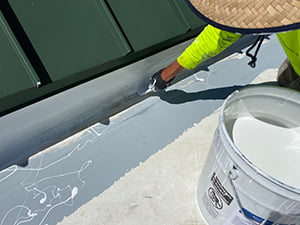
For a commercial building in Mandan, ND, a flat roof coating should be considered only after the existing roof has been evaluated as a sound restoration candidate. Eagle Eye Roofing Systems provides commercial roof coating and restoration work, including acrylic restoration. The decision should be based on moisture, adhesion, substrate condition, drainage, compatibility, flashing, and the repairs needed before coating rather than on age or appearance alone.
A coating can add a continuous protective surface to a suitable roof, but it does not correct saturated insulation, damaged or rotten decking, unresolved drainage problems, or widespread roof failure. Call (701) 202-7280 to discuss an evaluation for a Mandan commercial roof.
What a Commercial Flat Roof Coating Does
A fluid-applied coating cures into a continuous layer over the prepared roof surface. Depending on the product and system, that layer can provide weather protection and a reflective surface while allowing a serviceable roof to remain in place. The coating still depends on the roof beneath it, so preparation and compatible repairs matter as much as the coating itself.
Reflectivity, service life, energy effects, and recoating intervals are product- and project-specific. A reflective roof surface can reduce solar heat absorbed at the roof, but whole-building energy use also depends on insulation, HVAC operation, air leakage, occupancy, and climate. Any stated lifespan, savings, or warranty should come from the specific product and written project documents rather than from a universal coating claim.
Is Your Roof a Restoration Candidate?
The table below shows how common roof conditions affect the decision. It is a planning guide, not a pass-or-fail test. Final suitability depends on the roof system, concealed conditions, required repairs, and the selected coating system.
| Condition | When Coating May Fit | When Repair or Replacement Comes First |
|---|---|---|
| Moisture | Available evidence supports a dry, serviceable assembly or a limited condition that can be corrected before restoration | Wet or saturated insulation, uncertain moisture extent, or concealed conditions could undermine the coating scope |
| Adhesion | The prepared surface can meet the selected system’s adhesion and preparation requirements | Loose, blistered, contaminated, delaminated, or unstable material cannot provide a dependable bond |
| Substrate condition | Deck, membrane, seams, and surrounding materials remain serviceable after defined repairs | Damaged or rotten decking, widespread splits, or unstable roofing requires corrective work first |
| Drainage | Water reaches drains, scuppers, or edges as intended after maintenance or repair | Persistent ponding is tied to unresolved slope, deck, drain, or other drainage conditions |
| Compatibility | The proposed coating system is compatible with the existing roof and prior materials after preparation | Unknown layers, incompatible repairs, or earlier coatings prevent the new system from meeting its requirements |
| Flashing and penetrations | Curbs, edges, penetrations, and flashing can be repaired and incorporated into the restoration scope | Failed details require rebuilding or broader repair before coating is applied |
A commercial roof inspection in Mandan can help document these conditions before the restoration decision is made. If concealed moisture could change the project, the contractor should explain whether additional investigation is needed and what method is appropriate for that roof. No single scan, core, or field check automatically proves candidacy for every roof.
Types of Commercial Roof Coatings
Acrylic coatings are part of Eagle Eye Roofing Systems’ confirmed commercial restoration scope. Acrylic products are commonly used for reflective roof restoration when the existing roof and drainage conditions fit the selected system.
Silicone coatings and polyurethane coatings are other general commercial coating categories. They have different performance characteristics, preparation requirements, and compatibility limits. Their inclusion here is technical context, not a claim that every Eagle Eye project uses or offers those systems. The written proposal should identify the actual coating selected for the roof.
For the broader restoration decision, see Eagle Eye Roofing Systems’ roof restoration in Mandan page.
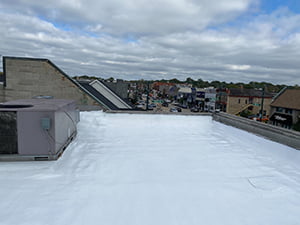
What a Coating Project Should Include
A useful written scope should describe the work required before, during, and after coating rather than list only the coating product.
- Preparation: cleaning, removal of loose material, and any primer or surface treatment required by the selected system.
- Repairs before coating: compatible repairs at seams, flashings, penetrations, fasteners, punctures, and other defects before the coating is used as the finished surface.
- Application: the product, preparation requirements, coverage or thickness, cure conditions, and any project-specific sequencing.
- Acceptance: review the completed work against the written scope and the selected system’s requirements rather than one universal field test.
- Follow-up: retain the project documents and inspect the roof according to its condition, exposure, rooftop activity, severe weather, and any written maintenance requirements.
North Dakota weather can affect application scheduling because coatings need suitable surface and weather conditions during installation and cure. The applicable limits come from the selected product and project requirements, so the schedule should allow for weather delays rather than rely on one universal temperature range.
Coating, Repair, or Replacement?
Restoration is one possible scope, not a substitute for every other roofing service. A localized defect may be better handled with targeted repair. A roof with widespread moisture, damaged decking, extensive membrane failure, or unresolved drainage may need a broader repair or replacement plan before restoration is considered.
When comparing proposals, make sure each contractor is pricing the same problem. Ask what conditions were inspected, what repairs are included before coating, what remains excluded, how concealed conditions will be handled, and what written product or warranty terms actually apply. For broader contractor-selection context, see Eagle Eye Roofing Systems’ page on hiring a roofing contractor in Mandan.
Commercial Flat Roof Coatings in Mandan, ND
A commercial roof coating can be a sound restoration option when the existing roof remains serviceable and the selected system is compatible with the roof beneath it. The decision should come from moisture, adhesion, substrate condition, drainage, flashing, and preparation requirements, not from a promised percentage of savings or a generic lifespan claim. To discuss a Mandan commercial roof, call Eagle Eye Roofing Systems at (701) 202-7280.
Frequently Asked Questions
How long does a commercial roof coating last?
There is no single lifespan for every coating. Service life depends on the product, preparation, installed coverage or thickness, roof condition, exposure, maintenance, and repairs.
Can a roof coating be applied in any weather?
No. Application and cure conditions depend on the selected product, so dry surfaces and suitable weather are required according to that system’s written instructions.
Will a roof coating stop existing leaks?
Only after the leak source and related defects are properly addressed. Wet insulation, damaged decking, failed flashing, and other underlying problems should not simply be covered.
Can a coating fix ponding water on a flat roof?
No. A coating does not correct the underlying slope, deck, drain, or other drainage condition that causes persistent ponding. The cause should be evaluated as part of the project scope.