
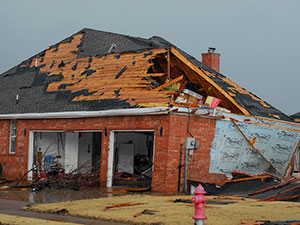
Severe weather can leave a commercial roof with obvious damage or problems that are difficult to confirm from the ground. After high winds, hail, heavy rain, or rapid temperature changes in Jamestown, ND, building owners should document what they can see safely and arrange professional evaluation when the roof may have been affected. Eagle Eye Roofing Systems provides statewide North Dakota commercial roofing support, including inspections and repairs. Call 701-202-7280 to discuss a commercial roof after severe weather.
Separate Visible Storm Symptoms From Professional Diagnosis
Some storm-related warning signs can be observed without stepping onto the roof. New ceiling stains, active interior drips, debris around the building, damaged gutters or downspouts, and visibly displaced material at a roof edge can all justify a closer look. These signs show that something may have changed, but they do not identify the full extent or exact source of roof damage.
Other conditions require roof-level inspection or additional testing. Seam separation, punctures, flashing damage, moisture beneath a membrane, and impact-related changes may not be visible from a safe ground-level position. A professional inspection should determine what failed, how large the affected area is, and whether insulation, decking, drainage, or other components also need attention.
Common Commercial Roof Storm Damage Risks
Wind can stress roof edges, flashing, seams, rooftop details, and mechanically attached components. The important question after a wind event is whether the roof now has loose, open, displaced, or damaged details that could allow water entry.
Hail can affect roofing materials differently depending on the system, impact conditions, age, and existing roof condition. Some damage may be visible, while other impact-related changes require a trained inspection. Building owners should avoid assuming a roof is undamaged simply because no puncture is visible from the ground.
Heavy rain can expose drainage or flashing problems, especially when debris restricts drains or water remains where it does not drain as intended. Freeze and thaw cycles can add stress to existing cracks, seams, and vulnerable details. These conditions do not automatically mean replacement is needed, but they can change the repair scope.
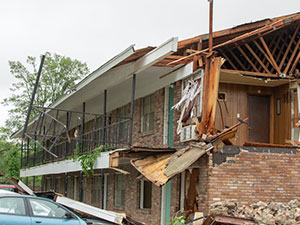
What You Can Check Safely After a Storm
Start inside the building and from safe exterior locations. Record new stains, drips, ceiling changes, damaged contents, or areas where water entered. From the ground, note visible roof-edge damage, displaced flashing, debris, damaged drainage components, or material that appears to have moved during the storm.
Do not climb onto a storm-damaged roof to investigate. Wet or icy surfaces, loose materials, concealed openings, and weakened roof areas can create hazards that are not obvious from below. Keep people away from interior areas affected by active leakage, falling material, or suspected structural damage, and follow the building’s emergency procedures when there is an immediate safety concern.
What a Professional Storm Inspection Should Clarify
The purpose of the inspection is to move from symptoms to a documented diagnosis. The contractor should identify affected roof areas, the type of defect found, whether concealed damage needs further investigation, and whether the recommended response is temporary protection, localized repair, broader restoration, or another scope.
For buildings where water entry is difficult to trace, Eagle Eye’s roof leak detection information for Jamestown illustrates why the location of an interior symptom may not identify the roof entry point. Leak diagnosis should follow evidence rather than assuming the nearest visible roof detail is the cause.
Document the Storm and the Roof Condition
Good records can help the property owner, contractor, and insurer understand what happened. Note the storm date, when interior symptoms first appeared, which areas were affected, and what temporary steps were taken. Take photographs from safe locations when practical, then keep the inspection report, repair scope, invoices, and follow-up photos together.
Roofing documentation can support an insurance claim, but it does not determine coverage or guarantee payment. Coverage depends on the policy, cause of loss, exclusions, timing, documentation requirements, and the insurer’s decision. Follow the insurer’s reporting instructions while using the roofing inspection to document the physical roof condition.
Use the Inspection to Set the Next Action
An inspection may identify a localized repair, a drainage or flashing correction, an area that needs further moisture investigation, or a broader restoration or replacement question. The recommendation should explain why the selected scope fits the observed condition. A storm event by itself is not proof that an entire roof needs replacement.
After repairs are complete, add the storm findings and completed work to the roof’s maintenance record. Eagle Eye’s commercial roof maintenance guidance emphasizes ongoing inspections and repair tracking, which can help compare future storm findings with the roof’s previous condition.
Commercial Roof Storm Damage in Jamestown, ND
After severe weather, document visible symptoms from safe locations, protect affected interior areas, and use a professional inspection to determine what happened on the roof. Eagle Eye Roofing Systems serves Jamestown and other North Dakota communities. Call 701-202-7280 to discuss commercial roof storm damage and the appropriate next step.
Frequently Asked Questions
What storm damage signs can I check without going onto the roof?
Look for new interior stains or drips, visible roof-edge changes, damaged gutters or downspouts, displaced materials, and storm debris from safe ground-level or interior locations.
Should building staff climb onto the roof after a storm?
No. Storm-damaged roofs can have slippery surfaces, loose materials, concealed openings, or weakened areas, so roof-level evaluation should be left to qualified personnel.
Does visible hail or wind damage mean the whole commercial roof must be replaced?
No. The appropriate scope depends on the location and extent of damage, roof condition, moisture findings, and whether repair or restoration remains practical.
Will a roofing inspection guarantee that an insurance claim is covered?
No. An inspection can document roof conditions and repair needs, but insurance coverage and payment depend on the policy and the insurer’s claim decision.