
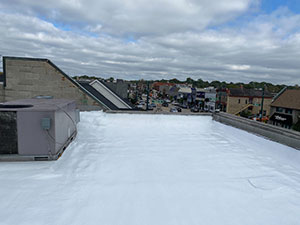
Elastomeric roof coatings are flexible, liquid-applied coatings that can protect a commercial flat or low-slope roof in Williston, ND, but only when the roof is a sound candidate. The coating goes over the existing roof, so its success depends on what is already there: how much moisture it holds, how well the surface will bond, whether the substrate is sound, how water drains and whether the materials are compatible. Eagle Eye Roofing Systems lists acrylic coatings and restoration among its commercial roofing services across North Dakota, including Williston.
This article explains what elastomeric coatings are, how the process works, and which conditions make coating the wrong choice. To discuss a Williston building, you can reach the team at (701) 202-7280.
What Are Elastomeric Roof Coatings?
Elastomeric coatings are liquid-applied coverings that cure into a rubber-like, flexible membrane. Because the cured coating can stretch and recover, it is designed to tolerate the expansion and contraction a roof goes through as temperatures change. It adds a protective layer over the existing roof surface, and a compatible coating can help resist UV exposure and weathering after cracks and seams receive appropriate preparation and repairs.
Different elastomeric products use different base chemistries, and each has its own surface, moisture and temperature requirements. The specific product, thickness and system should be named in a written scope instead of assumed from the general term.
Is the Roof a Sound Restoration Candidate?
A coating is not a cure for every roof problem. The table below compares the main conditions that point toward restoration with those that point toward repair or replacement first.
| Condition | Restoration may fit when | Repair first, or replace, when |
|---|---|---|
| Moisture | Any isolated wet materials can be removed and replaced before coating; the remaining assembly is dry. | Insulation is wet across large areas, or moisture returns after spot repairs. |
| Adhesion | The surface can be cleaned and primed so the coating bonds, with adhesion confirmed by the preparation and any test the manufacturer requires. | Layers are loose, blistered across wide areas or lifting from the deck. |
| Substrate condition | Decking is sound and the existing membrane or metal is intact beneath the surface wear. | Decking is rotten or deteriorated, or the existing membrane has failed widely. |
| Drainage | Water leaves the roof and any low spots are minor and addressed in the scope. | Ponding comes from sagging, poor slope or a drainage defect that a coating cannot correct. |
| Compatibility | The coating is compatible with the existing roof surface and any earlier coatings, based on inspection and the manufacturer data. | The existing material cannot accept a compatible system or the layers underneath are unknown. |
One favorable row does not settle the question. A roof with sound decking and limited moisture can still be a poor candidate if drainage is bad, and a roof with minor drainage issues may be a fine candidate once those are corrected. The inspection and the manufacturer’s requirements decide.
What a Coating Cannot Fix
A coating does not correct ponding water caused by sagging or poor slope. It does not repair rotten decking, and it does not dry out saturated insulation. Coating over wet insulation can trap moisture, which tends to show up later as blisters, new leaks or a failed bond. These conditions need to be repaired or replaced before any coating is considered, or the roof may need more than a coating.
Key Benefits of Elastomeric Roof Coatings
When the roof is a good candidate, elastomeric coatings can offer several practical advantages.
- Seamless protection: The cured coating forms a continuous surface over seams, fasteners and minor cracks, once those details have been prepared properly.
- Flexibility: The coating is designed to stretch and recover with temperature changes, which matters in Williston’s freeze-thaw conditions.
- Avoiding full tear-off: Restoration keeps the existing roof in place, which can reduce disruption and debris compared with replacement where the roof qualifies.
- Surface reflectivity: Some coatings are reflective and can lower roof surface temperatures, though cooling and energy results vary by building and product, and should not be assumed.
Service life, savings and warranty terms depend on the roof, the coating system and the written scope, so they should be confirmed for the specific project.
The Application Process
A well-run coating project follows a sequence, and each step protects the next.
- Inspection and scope: Check for moisture, loose or blistered areas, drainage problems and the type and condition of the existing surface.
- Preparation: Clean the surface and prime it where the manufacturer requires, so the coating can bond.
- Repairs: Address seams, cracks, flashings, penetrations and damaged sections identified in the scope before coating begins.
- Application: Apply the coating by spray or roller in the coats and thickness the manufacturer specifies, in suitable temperature and weather.
- Curing and acceptance: Allow the coating to cure, then review the finished roof against the agreed scope.
- Follow-up inspection: Recheck after the first heavy weather and on a regular schedule so small problems are caught early.
Timing depends on roof size, repair needs and weather, and coatings need suitable conditions to cure, so the schedule is set after the roof is evaluated. A commercial roof inspection in Williston is a practical first step, defined damage can be handled through roofing repair in Williston, and ongoing checks fit a maintenance schedule.
Why Property Owners Choose Elastomeric Coatings
Commercial owners often consider coatings because they want to extend the use of a roof that is worn but sound, limit disruption to operations, and avoid the cost and waste of a full tear-off. Those goals are reasonable when the roof qualifies. They are less reasonable when the roof has failed throughout, in which case replacement is the more honest comparison. Cost, lifespan and any warranty depend on the roof, product and scope of work, and should be confirmed in writing.
Professional Elastomeric Roof Coatings
Eagle Eye Roofing Systems provides general commercial roofing and acrylic coatings and restoration in North Dakota. For a Williston roof, ask for an assessment that covers moisture, adhesion, substrate condition, drainage and compatibility, along with a written scope that states the repairs and the coating system. Call (701) 202-7280 to start the conversation.
FAQ
Can elastomeric coatings go on any roof?
No. They are used on qualifying commercial roof surfaces, often low-slope roofs, and each roof must be evaluated for moisture, adhesion, substrate condition, drainage and compatibility.
Will a coating fix ponding water?
No. A coating does not correct drainage or slope defects, so ponding needs to be addressed in the scope or the roof may need other work.
Can the roof be walked on after coating?
Cured coatings can be slippery in some conditions, and some systems use added surface granules for traction. Ask about the product’s traction and walking guidance.
How much do elastomeric coatings cost?
Cost depends on roof size, condition, repairs needed and the coating system, so it is confirmed through a written estimate based on an inspection.