

Commercial roof maintenance in Williston, North Dakota is most useful when inspection findings are turned into a documented schedule instead of left as a one-time list of concerns. Wind, snow, temperature swings, and seasonal storms can expose weak points in a commercial roof, so owners need a practical way to decide what can be observed safely, what requires contractor access, which items are urgent, and when follow-up should happen.
Eagle Eye Roofing Systems provides commercial roofing services in Williston and throughout North Dakota. For maintenance, inspection, and related commercial roofing needs, call (701) 202-7280. The goal of a maintenance plan is to support the roof’s condition and create a clear record of observations, completed work, and next steps. It cannot guarantee that every future leak or weather-related problem will be prevented.
The Importance of Roof Maintenance
Commercial roof maintenance gives building owners a repeatable process for addressing small conditions before they become harder to manage. Blocked drainage, open seams, damaged flashing, membrane punctures, or recurring interior staining all deserve follow-up, but the visible symptom does not always identify the full cause.
A good plan also separates routine monitoring from conditions that need prompt contractor attention. An owner or facility team can note interior staining, visible debris, or obvious drainage concerns from a safe location. Roof-surface inspection, repairs, snow or ice removal, and work at seams, penetrations, or flashing should be handled by qualified roofing personnel with appropriate access and safety procedures.
Turning Inspection Findings Into a Maintenance Schedule
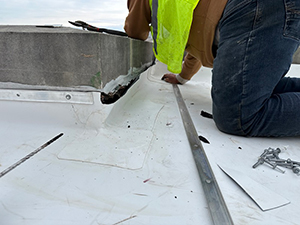
The schedule below is a planning framework, not a universal requirement for every roof. The right cadence depends on the roof system, building use, prior findings, weather exposure, and any requirements in the applicable warranty documents.
| Task | Who Checks It | Suggested Timing | Follow-Up Trigger |
|---|---|---|---|
| Visible drainage concerns at drains or scuppers | Owner or staff from a safe vantage point; contractor for roof access | Seasonally and after heavy rain or snowmelt | Prompt contractor review if water remains, drainage appears blocked, or a new leak is reported |
| Seams, flashing, curbs, and penetrations | Contractor | During planned roof inspections and after significant wind events when warranted | Repair or further assessment if details are open, loose, displaced, or repeatedly failing |
| Debris on roof surfaces or near drainage areas | Owner may observe safely; contractor handles roof-level removal | As conditions warrant, especially after storms | Schedule removal if debris could obstruct drainage or damage roofing materials |
| Interior staining or drips | Owner or staff inside the building | Whenever observed, especially after weather events | Request roof assessment because the interior symptom does not prove the exact entry point |
| Snow or ice accumulation affecting drainage or roof access | Owner observes from safe areas; contractor evaluates roof-level conditions | After significant winter weather when conditions raise concern | Contractor review if drainage is blocked, loading is a concern, or damage is visible |
| Overall membrane, coating, and prior repair condition | Contractor | At planned inspection intervals appropriate to the roof and warranty | Move from monitoring to repair or broader assessment when deterioration becomes repeated or widespread |
For each visit or observation, record the date, the condition found, photographs when available, who reviewed it, what work was completed, and the next follow-up date. If the roof has a contractor or manufacturer warranty, use the actual warranty documents to determine any inspection, maintenance, notice, or recordkeeping requirements. Insurance requirements also vary by policy, so maintenance records should be kept as useful property documentation rather than presented as proof that a claim will be covered.
Key Steps in Commercial Roof Maintenance
Routine contractor inspections can include membranes or coatings, seams, flashing, penetrations, drainage areas, and previous repairs, depending on the roof system. Cleaning and debris removal may also be appropriate when materials are interfering with drainage or roof performance.
Repairs should follow the condition found. A separated seam, damaged flashing detail, puncture, or other localized defect may support a defined repair when surrounding materials remain serviceable. Repeated problems or deterioration across multiple areas can justify a broader assessment instead of treating each symptom as an unrelated patch. Eagle Eye Roofing Systems lists inspections, maintenance, and repairs among its commercial roofing services.
Benefits of Proactive Maintenance
A documented maintenance program can help owners identify developing conditions earlier, plan repairs more deliberately, and build a usable history of the roof. That can support budgeting and replacement planning because the owner can see which areas are stable, which repairs are recurring, and how conditions change over time.
Maintenance may also support building-envelope performance when roof details, drainage, and penetrations remain serviceable, but energy use depends on many factors beyond the roof, including insulation, HVAC equipment, controls, occupancy, and air leakage. Maintenance should not be sold as a guaranteed energy-savings measure.
Williston Businesses Rely on Maintenance
Williston’s seasonal weather makes documented follow-up especially useful. Snow, freeze-thaw conditions, wind, and storms can affect drainage, flashing, exposed details, and prior repair areas. Rather than assuming every weather event caused damage, the maintenance process should identify what changed and whether the condition needs monitoring, repair, or a broader inspection.
Commercial Roof Maintenance Specialists
Commercial roof maintenance works best as an ongoing cycle: inspect, document, prioritize, complete appropriate work, and schedule the next review. Eagle Eye Roofing Systems serves Williston within its North Dakota commercial roofing area and can help property owners build that process around the actual roof and building conditions.
For commercial roof maintenance in Williston, ND, call Eagle Eye Roofing Systems at (701) 202-7280.
Frequently Asked Questions
What are signs that a commercial roof needs maintenance?
Interior staining, visible drainage problems, debris accumulation, open seams, damaged flashing, or recurring issues at prior repair areas are all reasons to schedule a professional review.
How often should a commercial roof be inspected?
The right frequency depends on the roof system, building conditions, weather exposure, prior findings, and any requirements in the applicable warranty documents. Additional review may be appropriate after significant weather.
Does regular maintenance guarantee my roof will never leak?
No. Maintenance can reduce avoidable risk and help identify developing conditions, but it cannot guarantee that a roof will never leak or sustain storm-related damage.
What should I keep in a commercial roof maintenance record?
Keep inspection dates, observations, photographs when available, completed work, unresolved items, follow-up dates, and any documentation required by the applicable contractor or manufacturer warranty.