
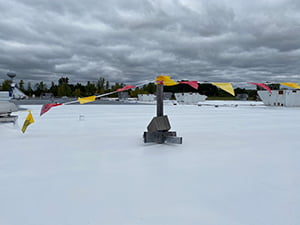
A commercial roof inspection in Minot, ND should give a property owner usable evidence for the next decision. The useful questions are what conditions were observed, where they are located, which findings need prompt attention, which can be monitored, and what additional investigation is needed before maintenance, repair, restoration, or replacement is approved.
Eagle Eye Roofing Systems provides commercial roofing services in Minot and throughout North Dakota. For a roof inspection, the goal should be to document the current condition clearly enough that the owner can compare findings with a proposed scope of work. Call (701) 202-7280 to discuss a commercial roof evaluation.
Why Roof Inspections Are Critical
Commercial roofs in Minot are exposed to snow, wind, hail, freeze-thaw cycles, and seasonal temperature changes. Those conditions can affect membranes, flashing, penetrations, roof edges, drainage areas, previous repairs, and rooftop equipment details. Some defects are visible from the surface, while others may require more investigation before their extent is known.
An inspection can also help separate a symptom from its source. An interior stain, for example, confirms that moisture reached the building interior but does not identify the exact entry point. If the concern is an active or suspected leak, Eagle Eye’s Minot roof leak detection information covers that narrower diagnostic purpose.
What an Inspection Report Should Tell You
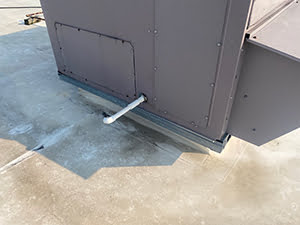
A useful inspection report should make the findings easy to act on. The exact format can vary by project, but owners should be able to understand what was observed, where it was observed, how certain the finding is, and what should happen next.
- Dated condition photos: Images should identify the area or detail being discussed so the owner can match the written finding to a roof location.
- Defect locations: Seams, flashing, penetrations, drains, edges, punctures, previous repairs, or other concerns should be described precisely enough to support a repair scope.
- Moisture evidence and limitations: If moisture readings, infrared observations, or other diagnostic information are used, the report should explain what the method can indicate and what still needs confirmation.
- Prioritized actions: Findings should be separated into conditions needing prompt attention, planned maintenance or repair, and items that can be monitored.
- Reinspection triggers: The report should identify practical reasons to inspect again, such as a major storm, a completed repair, a recurring leak, or a condition that is being monitored over time.
When Thermal or Moisture Findings Need Confirmation
Thermal imaging or other moisture-detection methods can help identify areas that deserve closer review, but they should not automatically be treated as proof of trapped moisture or a specific leak source. Weather, recent rainfall, roof materials, insulation, surface temperatures, and other conditions can affect what the equipment shows.
When a finding could materially change the repair or replacement scope, the contractor should explain whether physical confirmation is needed and what method is appropriate for the roof assembly. That may involve a targeted opening, core sample, moisture probe, or another project-specific method. The report should distinguish a suspected condition from one that has been confirmed.
How the Report Informs a Scoped Estimate
The inspection report should reach the person responsible for approving roof work and budget, such as a facility manager, owner, property manager, or other designated representative. From there, the findings can be translated into a scoped estimate that identifies the condition being addressed, the location, the proposed work, exclusions, and any investigation still needed before pricing can be finalized.
This gives the owner a way to compare the proposed work with the inspection evidence and understand why one item is urgent while another can be scheduled later.
Top Benefits of Routine Commercial Roof Inspection
Comparing inspection reports over time can show whether a seam, flashing detail, drainage area, or previous repair is stable, deteriorating, or recurring. That history can support maintenance planning and reveal when isolated repairs are becoming a broader pattern.
Inspection frequency should follow the roof system, age, exposure, prior findings, building use, warranty or insurance requirements when applicable, and recent weather events. There is no single schedule that fits every commercial building. Eagle Eye’s commercial roof maintenance information for Minot provides related context for turning inspection findings into an ongoing maintenance plan.
What’s Included in a Commercial Roof Inspection?
A commercial inspection can address membrane or surface condition, flashing, edges, penetrations, drainage, ponding areas, punctures, previous repairs, and visible storm-related damage. The exact scope should be clear before the inspection begins, especially if the owner expects moisture investigation, infrared scanning, destructive testing, or another service beyond a visual condition review.
The value of the inspection is not the length of the checklist. It is whether the findings are documented well enough to support the next decision and whether the limits of the inspection are clear.
Partner with Eagle Eye Roofing Systems
For a commercial roof in Minot, the next maintenance, repair, or replacement decision should follow the evidence found on the roof. Eagle Eye Roofing Systems can discuss the current condition and the type of inspection or follow-up assessment that fits the property. Call (701) 202-7280 to discuss the next step.
Frequently Asked Questions
How often should a commercial roof be inspected?
There is no universal schedule. Frequency should reflect the roof system, age, exposure, prior findings, building use, applicable warranty or insurance requirements, and major weather events.
What should an inspection report include?
It should clearly identify observed conditions, their locations, supporting photos or other evidence when included, priorities, limitations, and the recommended next step for each significant finding.
Are thermal imaging results proof of a leak or trapped moisture?
No. Thermal findings can identify areas that deserve closer review, but significant findings may need physical confirmation before they are used to define a repair or replacement scope.
How does an inspection report help with a repair estimate?
The report gives the estimator documented locations and conditions to work from, making it easier to define the proposed work, exclusions, priorities, and any investigation still needed before final pricing.