
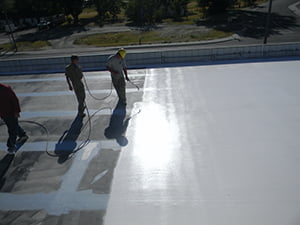
For a Bismarck, ND commercial building, an elastomeric roof coating can be a practical restoration option when the existing roof is still serviceable and the conditions that would undermine the coating have been identified first. Moisture, adhesion, substrate condition, drainage, compatibility, and the extent of needed repairs all matter before a coating system is selected.
Eagle Eye Roofing Systems provides commercial roof coating and restoration services in Bismarck. An experienced roofing contractor can assess whether coating fits the existing roof or whether repair, replacement, or additional investigation should come first. Call (701) 202-7280 to discuss the roof condition.
What Are Elastomeric Roof Coatings?
Elastomeric roof coatings are fluid-applied materials designed to form a continuous protective surface over a compatible existing roof. Their flexibility can help them accommodate normal roof movement and temperature changes when the coating, substrate, preparation, and application are appropriate for the system.
Commercial Roofing Challenge
Commercial roofs can be exposed to large temperature swings, ultraviolet radiation, rooftop equipment, drainage demands, wind, snow, and severe weather. Those conditions can contribute to wear at seams, penetrations, flashing, fasteners, membrane surfaces, and other details. Coating can address some surface-protection and restoration needs, but it should not be used to hide problems that require a different scope.
Is Coating the Right Call for Your Roof?
A coating restores and protects a suitable existing roof. It does not correct structural, drainage, or moisture problems underneath the surface. The table below separates evidence that can support coating from conditions that need repair, further investigation, or replacement planning first.
| Factor | Evidence Supporting Coating | Evidence Requiring Broader Work |
|---|---|---|
| Moisture | Moisture conditions have been evaluated and any limited affected areas can be addressed within the project scope. | Saturated insulation, trapped moisture, or an uncertain moisture extent needs separate investigation and corrective work. |
| Adhesion | The existing surface can be cleaned, prepared, and brought into compliance with the selected coating system’s requirements. | Loose material, widespread delamination, contamination, or another condition prevents reliable adhesion. |
| Substrate condition | The deck and supporting materials remain serviceable after included repairs. | Rotten, soft, or structurally deteriorated decking cannot be corrected by coating. |
| Drainage | Drainage functions adequately or correctable maintenance items are addressed before coating. | Chronic ponding caused by slope, drain, or structural conditions needs its own corrective scope. |
| Compatibility | The proposed coating, primer, and repair materials are compatible with the existing roof after assessment. | Existing materials, prior coatings, or surface conditions do not meet the selected system’s compatibility requirements. |
Coating does not correct ponding-water drainage defects, rotten decking, or saturated insulation. Those conditions need their own repair or replacement scope before restoration proceeds.
Key Benefits for Commercial Building Owners
Extended Roof Life
On a roof that qualifies, coating can extend the useful life of the existing roof by protecting the surface and delaying a full replacement. Actual service life depends on the existing roof, preparation, selected product, exposure, maintenance, and how the system performs after application.
Reflectivity and Energy Considerations
Some elastomeric coatings are highly reflective and can reduce solar heat absorbed at the roof surface. That may reduce cooling demand for some buildings, but actual energy savings depend on insulation, HVAC efficiency, roof area, occupancy, climate, and the selected coating system.
Continuous Surface Protection
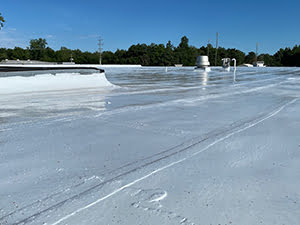
A properly applied coating can create a continuous protective layer across compatible roof surfaces and details. That can reduce exposure at vulnerable areas, but the coating still depends on proper preparation, repair of existing defects, and compatible detailing at seams, penetrations, flashing, and drains.
Reduced Tear-Off on Suitable Roofs
When the existing assembly qualifies for restoration, coating can preserve more of the current roof and reduce the amount of tear-off and disposal compared with full replacement. The actual project scope still depends on the roof condition and the repairs required before coating.
Application Considerations
Preparation should follow the selected coating system and the actual roof. That can include cleaning, removing loose material, repairing seams, flashing, penetrations, or damaged areas, and addressing moisture or substrate concerns that would interfere with the project.
Primer, reinforcement, coverage rate, thickness, number of coats, cure conditions, and any adhesion checks should follow the selected product and written project specification. A test area or adhesion check may be appropriate on some roofs, but it should not be treated as a universal procedure for every coating project.
After application, the completed work should be reviewed against the agreed scope. Depending on the system and contract, acceptance may address coverage, thickness, repaired details, transitions, drains, and other specified conditions. Future inspection and roof maintenance should reflect the roof condition, exposure, selected coating system, and any applicable written requirements rather than a fixed one-time follow-up rule.
Quality Elastomeric Roof Coatings
For a commercial building in Bismarck, an elastomeric coating can be a practical restoration option when the roof remains serviceable and the underlying conditions support it. Eagle Eye Roofing Systems can evaluate the roof and discuss whether coating, repair, replacement, or additional investigation fits the building. Call (701) 202-7280 to discuss the next step.
Frequently Asked Questions
What can make a roof unsuitable for an elastomeric coating?
Chronic drainage-related ponding, saturated insulation, rotten or structurally deteriorated decking, widespread delamination, or incompatible existing materials can require repair or replacement before coating is considered.
What types of commercial roofs can receive elastomeric coatings?
Several commercial roof types may be candidates, but suitability depends on the specific roof, existing materials, moisture condition, preparation, and compatibility with the selected coating system.
Can an elastomeric coating reduce cooling costs?
A reflective coating can reduce roof-surface heat gain and may reduce cooling demand, but actual savings depend on the building, insulation, HVAC system, climate, and selected coating.
How is a coated roof checked after application?
The completed work should be reviewed against the written project scope and selected system requirements. Depending on the project, that can include coverage, thickness, repaired details, transitions, drains, and other specified conditions.