

For commercial property owners in Williston, ND, choosing a roofing contractor should involve more than comparing prices or accepting a verbal promise. A contractor’s license status, insurance documentation, relevant commercial references, and written project scope all give you evidence you can check before work begins. Eagle Eye Roofing Systems serves commercial properties across North Dakota. If you are planning roof work in Williston, call 701-202-7280 to discuss your building and project needs.
Verify the Contractor’s License and Insurance
Start with documents that can be independently confirmed. North Dakota requires contractors to be licensed through the Secretary of State when a job exceeds the state’s licensing threshold. Property owners can use the state’s contractor search to check whether a license is current and in good standing rather than relying only on a license number printed on a proposal.
Insurance should be verified in the same way. Ask for a current certificate of liability insurance issued in the contractor’s business name. For contractors with employees in North Dakota, workers’ compensation coverage is also part of the state’s contractor licensing process. The goal is to review current documentation that applies to the company doing the work, not an old certificate or a general statement that the business is insured.
If a contractor points to manufacturer certifications or specialized training, ask which credentials apply to the roofing system being proposed and whether they are current. Certifications can be useful supporting evidence, but they should be treated as specific documents to verify rather than assumed from a contractor’s marketing.
Compare Relevant Commercial Roofing Experience
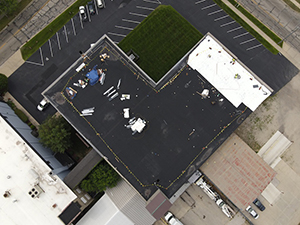
Experience matters most when it is relevant to your building and roof system. Ask for recent commercial projects that are similar in size, use, roof type, or scope. A contractor who has completed comparable work should be able to explain what the project involved and provide references when appropriate.
When speaking with references, ask practical questions. Was the written scope clear? Were changes documented before extra work proceeded? Did the contractor communicate around access, scheduling, weather delays, and building operations? Did the final work match the agreed scope? These questions are more useful than asking only whether the customer was satisfied.
Photos and project summaries can also help, but they should support a broader conversation about the contractor’s actual role. For a large commercial project, confirm whether the referenced work involved repair, restoration, replacement, or another service comparable to what your property needs.
Review Reputation and Communication
Online reviews can reveal patterns in communication and service, but they are only one part of due diligence. Look for consistent themes rather than relying on a single positive or negative review. You can also ask the contractor for recent commercial references and check available public business records when evaluating the company.
Communication during the estimating stage is another useful signal. From the initial consultation to project completion, you should understand who your contact is, how questions will be handled, and how changes will be documented. Clear answers before signing make it easier to manage the project once crews are on site.
Confirm the Written Scope Before Signing
A commercial roofing proposal should clearly identify what work is included. Review the roof areas covered by the project, materials or system being proposed, preparation or tear-off work, exclusions, site access, disposal responsibilities, project sequencing, and how unexpected conditions will be handled.
Ask how changes are approved and priced if hidden damage or other conditions are discovered after work starts. The written agreement should also identify the project price or pricing method, payment terms, expected schedule, and the warranty documents that apply to the completed work. If any of these items are unclear, resolve them before signing rather than assuming they will be handled later.
For commercial properties, operational details matter too. Discuss loading areas, tenant access, rooftop equipment, work hours, staging, and any areas that must remain open. A written plan helps both the property owner and contractor understand how roofing work will affect normal building operations.
Choose a Commercial Roofing Contractor Using Verifiable Information
Checking credentials is not about finding a contractor who makes the strongest claims. It is about confirming the facts that matter for your specific project: current licensing, appropriate insurance, relevant commercial experience, references, and a written scope that explains what will be done.
Eagle Eye Roofing Systems provides commercial roofing services throughout North Dakota, including Williston. If you are comparing contractors or preparing for a commercial roofing project, review the documentation carefully and ask questions until the proposal is clear. You can also review another Eagle Eye roofing contractor resource or call 701-202-7280 to discuss your project.
Frequently Asked Questions
How can I verify a roofing contractor’s license in North Dakota?
Use the North Dakota Secretary of State’s contractor search to confirm that the license is current and in good standing. Match the business name and license information to the contractor providing your proposal.
What insurance documents should I ask a commercial roofing contractor for?
Ask for a current certificate of liability insurance and confirm workers’ compensation coverage when applicable. The documentation should identify the contractor actually performing the work.
What should I ask commercial roofing references?
Ask about communication, adherence to the written scope, handling of changes, scheduling, and whether the completed work matched the agreement. References from projects similar to your building are the most useful.
What belongs in a commercial roofing scope of work?
It should define the work areas, materials or system, preparation, exclusions, sequencing, pricing, change process, schedule, payment terms, and applicable warranty documents.