
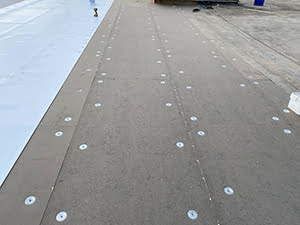
Mandan’s commercial roofs live through some of the widest temperature swings in the state, and the roof rarely fails on a predictable schedule tied to the calendar. The best time to catch a developing problem is not after a storm, but at the specific points in the year when Mandan’s climate puts the most stress on a flat or low slope system. The commercial roofing companies that time their inspections and repairs around those windows tend to catch far more before it becomes expensive.
For related commercial roofing guidance in Mandan, see metal roof restoration in Mandan.
Call Eagle Eye Roofing Systems at 701-202-7280 for commercial roofing companies in Mandan, ND who work around your building’s actual risk calendar, not just a generic maintenance date.
Commercial Roofing Companies and Seasonal Damage
Spring is the season that reveals what winter did to a roof. As snow and ice melt, water finds every low spot, every soft seam, and every spot where a membrane pulled away during repeated freeze and thaw cycles. Drains that were buried under snow for months sometimes turn out to be clogged with debris, which means the first heavy spring rain has nowhere to go.
This is also when minor damage from ice buildup at the roof edge becomes visible for the first time. A section of membrane that cracked in January might not show a leak until the spring melt actually pushes water through it. Catching these issues in April or May, before summer storm season arrives, keeps a small repair from becoming a bigger one.
Summer Storms and Their Effect on Mandan Roofs
North Dakota summers bring hail, high wind, and sudden downpours, often with little warning. A roof that looked fine in June can take real damage from a single severe storm, and the effects are not always obvious from ground level. Loosened flashing, punctured membrane, and displaced fasteners are common after a hard hailstorm, even when the roof still appears intact.
Summer heat adds its own slower pressure. Extended UV exposure and high surface temperatures accelerate membrane aging, particularly on darker roofing systems that absorb more heat. A roof inspected right after a major storm, rather than weeks later, gives a property owner the clearest picture of what actually needs attention before winter arrives.
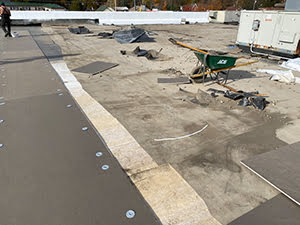
Preparing a Commercial Roof for Mandan Winters
Fall is the last real window to address anything before snow load and subzero temperatures make repairs more difficult and more expensive. Sealing small gaps, clearing drains one more time, and confirming flashing is secure before the first freeze prevents a minor issue from turning into a winter emergency that is harder to reach and slower to fix.
Snow load itself is a separate concern from temperature. Flat and low slope roofs need clear drainage paths so meltwater during winter thaws does not refreeze into ice dams along the edges, which can back water up under the membrane.
Expert Commercial Roofing Company
A roof that gets attention once a year, at whatever time happens to be convenient, misses the specific windows when Mandan’s climate creates the most risk. Spring and fall inspections, paired with a prompt check after any major summer storm, cover the moments that matter most.
For commercial roofing companies in Mandan, ND contact Eagle Eye Roofing Systems at 701-202-7280 today.
FAQ
Why does the timing of a roof inspection matter more than just doing it once a year? Mandan’s climate creates specific stress points at specific times, like the spring thaw and summer storm season, so an inspection timed around those windows is more likely to catch damage while it is still minor.
How soon after a hailstorm should a commercial roof be checked? As soon as possible, ideally within a few days, since storm damage like loosened flashing or punctured membrane is not always visible from the ground and gets worse the longer it sits.
Does snow load actually damage a flat commercial roof? Heavy snow adds weight the structure has to support, and when it melts and refreezes at the edges it can form ice dams that push water back under the membrane, so clear drainage matters as much as the weight itself.