
For building owners in Jamestown, ND, leaks, surface corrosion and sun exposure can affect the same commercial roof. Each problem calls for its own repair, and a compatible coating may protect the prepared assembly afterward. Roof restoration is a way to address those conditions on a roof that is still structurally sound, using targeted repairs followed by a protective coating, without the tear-off and disruption of full replacement. Eagle Eye Roofing Systems lists acrylic coatings and restoration among its commercial roofing services in North Dakota. To discuss a Jamestown building, you can reach the team at (701) 202-7280.
The key question is whether the existing roof is a sound restoration candidate. This article explains how restoration works, what it does for leaks, rust and UV exposure, and which conditions make coating the wrong choice.
How Restoration Addresses Leaks, Rust, and UV Damage Simultaneously
Understanding Roof Restoration and How It Works
Roof restoration repairs, reinforces and protects an existing roof system. Unlike patchwork, it treats the roof as a whole, so leaks, corrosion and UV breakdown can be handled in one coordinated scope of work.
The process starts with an assessment of the roof surface, seams, fasteners, flashings and drainage areas. Problem zones are repaired first, then the surface is cleaned, primed where required and coated. The order matters: a coating applied over unrepaired defects or a dirty surface is only covering the problem.
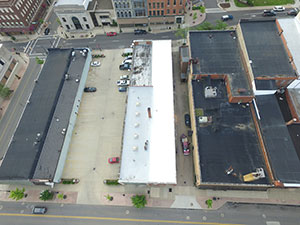
For building owners, the appeal is efficiency. Instead of managing separate repairs for leaks and rust, restoration consolidates the work into one project, and the building keeps its existing roof in place.
How Roof Restoration Stops Leaks, Rust, and UV Damage Together
Restoration can address several common roof problems in the same project, as long as each one is identified and repaired before coating begins.
Addressing Leaks at Their Source
Leaks often form around seams, penetrations, flashings and aging materials. During restoration these areas are repaired and reinforced with sealants and fabric systems chosen to move with the roof, then covered by the coating. Sealing the whole surface rather than isolated spots can reduce the chance of recurring leaks from temperature swings, but a coating cannot stop a leak that comes from a failed deck, wet insulation or a drainage defect.
Treating and Preventing Rust
On metal roofing, rust is a major concern. When a metal roof is suitable for restoration, preparation can involve removing loose corrosion and treating affected areas with a compatible primer before the protective coating. This helps slow corrosion from spreading. Metal that has rusted through needs to be repaired or replaced, since a coating does not rebuild lost material.
Shielding Against UV Exposure
Constant sun breaks down roofing materials, leading to cracking, fading and brittleness. Restoration coatings add a protective surface layer that is designed to resist UV exposure, and some are reflective, which can lower surface temperatures. The effect varies by product and building, so reflectivity and energy results should be confirmed with the manufacturer’s data rather than assumed.
By handling leaks, rust and UV exposure in one system, restoration can create a more uniform protective surface, provided the roof was a good candidate to begin with.
Is Your Roof a Sound Restoration Candidate?
Restoration is not right for every roof. The table compares the main conditions that point toward restoration with those that point toward repair or replacement first.
| Condition | Restoration may fit when | Repair first, or replace, when |
|---|---|---|
| Moisture | Moisture is limited to identified areas that can be removed, replaced and repaired before coating. | Insulation is wet across large areas, or moisture returns after spot repairs. |
| Adhesion | The surface can be cleaned and primed so the coating bonds, confirmed by preparation and any test the manufacturer requires. | Layers are loose, blistered across wide areas or lifting from the deck. |
| Substrate condition | Decking is sound and the existing membrane or metal is intact beneath the surface wear. | Decking is rotten or deteriorated, or the existing membrane has failed widely. |
| Drainage | Water leaves the roof and any low spots are minor and handled in the scope. | Ponding comes from sagging, poor slope or a drainage defect that a coating cannot correct. |
| Compatibility | The coating is compatible with the existing surface and any earlier coatings, based on inspection and manufacturer data. | The existing material cannot accept a compatible system or the layers underneath are unknown. |
One favorable row does not settle the question. A roof with sound decking can still be a poor candidate if drainage is bad, and a roof with minor drainage issues may qualify once those are corrected. The inspection and the coating manufacturer’s requirements decide.
What a Coating Cannot Fix
A coating does not correct ponding water caused by sagging or poor slope. It does not repair rotten decking, and it does not dry out saturated insulation. Coating over wet insulation can trap moisture, which tends to appear later as blisters, new leaks or a failed bond. These conditions need repair or replacement before any coating is considered, and when they are widespread the honest comparison is full replacement rather than restoration.
Long-Term Benefits Building Owners Should Understand
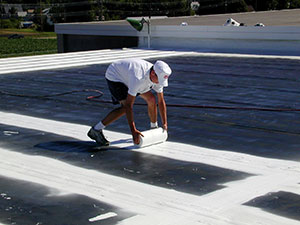
Beyond the immediate repairs, a compatible restoration coating adds a protective layer over repaired roof areas. With proper substrate preparation and application, the system can help limit weather exposure while preserving the existing roof assembly. It still needs inspections and prompt attention to damage or drainage concerns.
Restoration can also give an older roof a cleaner, more uniform appearance. Service life, savings and any warranty depend on the roof, the coating system and the written scope, so they should be confirmed for the specific project instead of assumed.
What a Restoration Project Involves
- Inspection and scope: Check for moisture, loose or blistered areas, rust, drainage problems and the type and condition of the existing surface.
- Preparation: Clean the surface and remove loose material, then prime where the manufacturer requires.
- Repairs: Address seams, fasteners, flashings, penetrations and damaged sections before coating begins.
- Application: Apply the coating in the coats and thickness the manufacturer specifies, in suitable temperature and weather.
- Curing and acceptance: Allow the coating to cure, then review the finished roof against the agreed scope.
- Follow-up inspection: Recheck after the first heavy weather and on a regular schedule so small problems are caught early.
A commercial roof inspection in Jamestown can document the condition of the existing roof, while roofing repair in Jamestown addresses defined defects before broader restoration is considered. Timing depends on roof size, repair needs and weather.
Roof Restoration in Jamestown, ND
Restoration is most effective when the underlying structure is still sound. If the deck and major components are intact, it can extend how long a roof stays in service. Owners dealing with recurring leaks, surface corrosion or visible sun damage often find it a practical option, while roofs with widespread wet insulation or deck damage usually need a different plan.
For a Jamestown building, ask for an assessment that covers moisture, adhesion, substrate condition, drainage and compatibility, along with a written scope that names the repairs and the coating system. Eagle Eye Roofing Systems can be reached at (701) 202-7280, and this guide to working with a roofing contractor explains what to expect from the process.
Frequently Asked Questions
What types of roofs are suitable for roof restoration?
Some metal, flat and low-slope roofs may qualify when the deck and underlying structure are sound and the coating is compatible. Each roof still needs an inspection first.
Can roof restoration prevent future leaks?
Sealing seams, fasteners and the surface can reduce the chance of new leaks, but it cannot fix leaks caused by rotten decking, saturated insulation or ponding water.
Does a reflective coating lower energy costs?
Some coatings reflect sunlight and can lower roof surface temperature, but savings vary by building and product, so confirm them with the manufacturer’s data.
Is roof restoration less disruptive than roof replacement?
Often, because the existing roof stays in place and there is no full tear-off. The actual disruption depends on the repairs needed and the roof size.