
If your commercial roof is aging but still fundamentally sound, roof restoration can protect it without a full tear-off. Eagle Eye Roofing Systems provides acrylic coatings and restoration for suitable low-slope commercial roofs across North Dakota, including Fargo properties. The key question is whether your roof is a sound candidate, because a coating can seal and protect a roof that is structurally healthy but it cannot fix problems underneath it.
To talk through a Fargo area building, you can reach the team at (701) 202-7280.
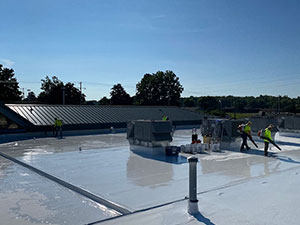
What Commercial Roof Restoration Involves
Restoration keeps the existing roof in place and adds a new protective layer over it. On a flat or low-slope roof, the work typically starts with a close look at the surface, then cleaning, repair of identified defects such as open seams, cracks, loose flashing and damaged penetrations, and finally application of a coating system. The goal is a continuous, watertight surface that shields the older roof from sun, water and temperature swings.
Because the coating goes over what is already there, restoration avoids tear-off, debris hauling and the disruption of a full replacement. That can matter for occupied buildings where tenants, inventory or equipment sit directly below the roof deck. It also means the quality of the result depends heavily on the condition of the roof you start with.
Is Your Fargo Roof a Good Restoration Candidate?
Restoration works best when the problems are on the surface rather than underneath. Typical candidates include roofs with weathering, minor membrane cracking, failing seam sealant, surface oxidation or localized leaks that can be traced and fixed. Roofs that are wet through, structurally compromised or poorly drained usually call for repair or replacement first. The table below shows how the main conditions point one way or the other.
| Condition to check | Restoration may fit when | Repair or replacement is likely needed when |
|---|---|---|
| Moisture | Moisture is isolated and affected wet material can be removed and replaced before coating. | Insulation is wet across large areas, or moisture keeps returning after spot repairs. |
| Adhesion | The existing surface is clean enough to bond with the right preparation and primer. | Layers are loose, blistered across wide areas, or lifting from the deck. |
| Substrate condition | Decking is sound and the membrane or metal panels are intact beneath the surface wear. | Decking is rotten or deteriorated, or the membrane has failed widely. |
| Drainage | Water leaves the roof, and any low spots are minor and addressed in the scope. | Ponding water comes from a slope or drainage defect that a coating cannot correct. |
| Compatibility | The coating system is compatible with the existing membrane, metal or foam, based on inspection and manufacturer data. | The existing material cannot accept a compatible system, or the layers underneath are unknown. |
No single row decides the outcome. A roof with one minor drainage issue and sound insulation may still be a candidate, while a roof with widespread trapped moisture usually is not. The inspection is where those judgments get made, and a written scope should reflect what was actually found.
What a Coating Cannot Fix
A coating is a surface system, so it has clear limits. It does not correct ponding water caused by a sagging deck or inadequate slope, because the water will keep collecting and wearing on the new surface. It does not repair rotten decking, and it does not dry out saturated insulation. Coating over wet insulation can trap moisture, which tends to show up later as blisters, new leaks or a failed bond.
When those conditions are found, the right first step is usually repair or partial replacement of the affected area, followed by restoration of the rest if the roof still qualifies. Where moisture or an active leak is the starting concern, commercial roof leak detection helps pinpoint the source before any coating decision is made. A documented commercial roof inspection is also a practical way to record conditions and prioritize work.
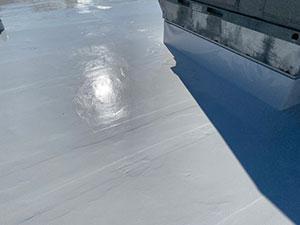
How a Restoration Project Typically Runs
A well-run restoration follows a sequence, and each step protects the next.
- Inspection and scope: Check for moisture, loose or blistered areas, drainage problems, and the type and condition of the existing roof surface.
- Preparation: Clean the surface so the coating can bond, and remove or correct anything that would prevent adhesion.
- Repairs: Address seams, cracks, flashings, penetrations and any damaged sections identified in the scope before coating begins.
- Coating application: Apply the selected system according to the manufacturer’s requirements for surface prep, weather and coverage.
- Acceptance and follow-up: Review the finished roof against the agreed scope, then schedule periodic inspections so small problems are caught early.
Fargo’s freeze-thaw cycles and strong summer sun make surface preparation and application conditions especially important. Coatings need suitable temperatures and dry surfaces to cure properly, so scheduling around the weather is part of the plan.
Roof Types and Compatibility
Different roof materials may be candidates for coating-based restoration, but suitability must be confirmed for each existing assembly. Single-ply membranes, built-up roofs and metal roofs require different preparation and compatible product systems. A roof type alone does not establish whether restoration is possible.
Metal roofs are a case of their own, with fasteners, seams and corrosion to address before coating, which is covered on the metal roof restoration page. For roofs where insulation and waterproofing both need attention, spray foam roofing with a protective coating is another option to discuss during the evaluation.
Restoration, Repair or Replacement
Restoration is one choice among several. Repair makes sense when damage is isolated and the rest of the roof is in good shape. Replacement makes sense when the roof has failed throughout, the deck or insulation is compromised, or the existing system cannot accept a compatible coating. Restoration sits in the middle for roofs that are worn but sound. Cost, lifespan and any warranty coverage depend on the roof, the coating system and the scope of work, so those details should be confirmed in writing for your building rather than assumed.
Talk With Eagle Eye About Your Roof
Eagle Eye Roofing Systems provides general commercial roofing, acrylic coatings and restoration, and spray foam roofing installation in North Dakota. If you are weighing restoration for a Fargo building, ask for an assessment of moisture, adhesion, substrate condition, drainage and compatibility, along with a clear scope that explains what will be repaired and what will be coated. Call (701) 202-7280 to start the conversation.
Frequently Asked Questions
Which commercial roofs can be restored?
Many flat and low-slope roofs can be considered, including EPDM, TPO, PVC, built-up and metal. Whether a specific roof qualifies depends on its condition and on compatibility with the coating system.
How long does a restoration take?
Timing depends on roof size, the amount of repair needed and the weather. Coatings need suitable conditions to cure, so the schedule is set after the roof is evaluated.
Can a coating stop a roof that holds standing water?
Not by itself. A coating does not correct drainage or slope defects, so ponding water needs to be addressed in the scope or the roof may need other work.
Does restoration affect energy costs?
Reflective coatings can reduce roof surface heat, but savings vary by building, roof and coating, so they should not be treated as guaranteed.