
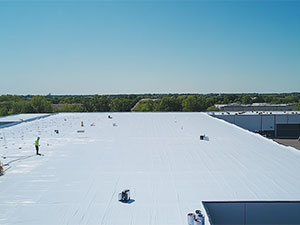
A commercial roof inspection can give a Fargo facility useful evidence for maintenance and capital planning when the report separates observed conditions from estimates and recommendations. The goal is not to predict an exact roof lifespan or guarantee future costs. It is to document current conditions, identify priorities, show where more investigation may be needed, and assign clear next steps. Eagle Eye Roofing Systems serves Fargo and can be reached at 701-202-7280.
Using a Commercial Roof Inspection Report for Budgeting
Fargo roofs can face wind, snow, temperature swings, and repeated freeze-thaw conditions. Those exposures can affect seams, flashing, drainage, penetrations, coatings, and other parts of a commercial roof, but the inspection should still be based on what is actually observed on the building rather than on climate assumptions alone.
A useful report should help the facility team distinguish work that needs prompt attention from items that can be monitored or scheduled later. That makes the report a budgeting tool rather than just a list of roof defects.
What the Inspection Should Document
A commercial roof inspection may include visible conditions at the roof surface, seams and flashing, drainage, penetrations, edge details, prior repair areas, and accessible interior locations. The report should identify where each finding was observed and include photos when useful.
- Surface condition: Document visible cracks, punctures, deterioration, ponding, or other relevant conditions.
- Seams and flashing: Record openings, deterioration, or other visible concerns at transitions and penetrations.
- Drainage: Note blocked drains, standing water, or areas where drainage performance needs follow-up.
- Roof edges and details: Record visible conditions at perimeter metal, terminations, coping, or similar details.
- Interior observations: Document stains or moisture indicators and explain that interior symptoms do not automatically prove the exact roof entry point.
Photos should be tied to a location or clearly described roof area. If concealed moisture, insulation condition, or deck damage cannot be established visually, the report should say so instead of presenting an assumption as a confirmed finding.
Separate Observations From Estimates
An observed open seam, damaged flashing, ponding area, or puncture is different from an estimate of remaining service life, repair cost, or project timing. Estimates can support planning, but they are not guarantees and may change after pricing, testing, or a more detailed scope.
This distinction is especially useful when the report is used for facility planning. Decision-makers can budget with a range or planning allowance while keeping confirmed defects separate from assumptions about future performance.
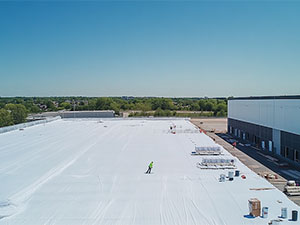
Prioritize Findings by Action, Not Just Severity Labels
A useful report should explain what happens next. Findings can be grouped into categories such as prompt corrective work, scheduled maintenance, further investigation, or monitoring. The report should also identify who owns each follow-up step.
For example, the facility team may be responsible for approving access, coordinating rooftop equipment, or tracking a condition for the next review. The roofing contractor may be responsible for preparing a repair scope, confirming compatibility, or investigating a suspected moisture condition. Assigning ownership reduces the chance that a recommendation is noted but never acted on.
Use Inspection Findings to Build a Budget
A report can help managers organize work by timing and scope. A localized repair may fit a maintenance budget, while broader restoration or replacement planning may need a capital budget. The report should not assume that early repair always produces a specific savings amount.
If the report recommends maintenance, coating, restoration, or replacement, ask what roof conditions support that recommendation and what remains uncertain. A recommendation should connect to documented evidence, not simply to roof age or a generic expected lifespan.
Warranty and Insurance Records Need Their Own Verification
Inspection records can be useful documentation, but warranty and insurance requirements vary. Do not assume that every commercial roof warranty requires the same inspection frequency or that one missed inspection automatically voids coverage. Review the actual written warranty terms for the installed system.
Likewise, photos and condition records may help document the roof before or after a weather event, but they do not guarantee insurance coverage or claim approval. Coverage decisions depend on the policy, cause of loss, documentation, and claim review.
Plan Future Work Without Guaranteeing Financial Outcomes
Repeated findings can help a facility see whether a condition is stable, worsening, or recurring. That can support earlier budgeting for repair, restoration, or replacement without claiming that a specific action will extend roof life by a fixed number of years or avoid a guaranteed future cost.
If a future project includes reflective materials, coatings, insulation changes, or another efficiency-related upgrade, evaluate the full building and project scope. Energy savings and incentives depend on the actual assembly, building operation, current programs, and eligibility rules, so they should be verified separately.
Professional Commercial Roof Inspection
For a Fargo facility, the strongest inspection report is one that documents current conditions, uses located photos, separates observations from estimates, prioritizes findings, assigns follow-up ownership, and explains what evidence supports future maintenance or capital planning. Call Eagle Eye Roofing Systems at 701-202-7280 to discuss a commercial roof inspection and the documentation needed for facility budgeting.
Frequently Asked Questions
What should a commercial roof inspection report include?
It should include located observations, useful photos, prioritized findings, unresolved conditions, recommended next steps, and clear ownership for follow-up.
Can an inspection report tell me exactly how long the roof will last?
No. It can document current conditions and support planning, but remaining service life is an estimate that depends on the roof assembly, exposure, maintenance, and future conditions.
Can a roof inspection report help with budgeting?
Yes. It can help separate prompt repairs, scheduled maintenance, further investigation, and longer-term capital work, but actual costs still require confirmed scope and pricing.
Are the costs and timelines in an inspection report guaranteed?
No. Cost and schedule figures are planning estimates unless they are later confirmed in an approved proposal or contract for specific work.