
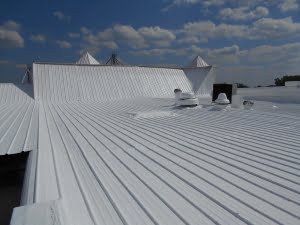
Bismarck commercial roofs face brutal swings between subzero winters and blistering summer heat, and that stress shows up on the roof long before it shows up anywhere else in the building. Property managers who wait for a visible leak before calling for help often face a repair bill far larger than if the same issue had been caught months earlier. Working with commercial roofing companies that understand flat and low slope systems means small problems get caught while they are still inexpensive to fix.
For related commercial roofing guidance in Bismarck, see Commercial roofing company in Bismarck.
Call Eagle Eye Roofing Systems at 701-202-7280 for commercial roofing companies in Bismarck, ND who treat prevention as seriously as repair.
Protecting Commercial Roofs
Flat and low slope commercial roofs in Bismarck tend to show the same early warning signs. Ponding water is usually first. After spring thaw or a heavy summer storm, water that should drain within 48 hours instead sits on the membrane for days, adding weight and accelerating breakdown where it collects.
Seam separation and flashing failure follow close behind. North Dakota’s freeze and thaw cycle works at every joint on the roof, from field seams to flashing around rooftop units and parapet walls. These are the most vulnerable points, and also the ones most likely to be missed during a quick visual check from the ground.
Punctures and membrane shrinkage round out the list. Foot traffic near HVAC equipment, falling ice, and simple age all take a toll. None of these look dramatic when they start, which is why they get missed until harder to fix.
Small Roof Problems Turn into Big Ones
Water does not travel in a straight line once it gets past the membrane. It follows the path of least resistance across the deck before it shows up as a stain on the ceiling below. By the time that stain is visible, the insulation underneath has often been wet for weeks.
That delay is what turns a manageable repair into a major expense. A sealant fix costing a few hundred dollars can become a full deck and insulation replacement running into the tens of thousands if it goes unnoticed through a winter. Early detection keeps the cost contained to the roof itself rather than letting it spread into the ceiling and whatever sits below.
A roof that looks fine from the parking lot can still be failing, since most of the damage happens inside the assembly, not somewhere a passerby would notice.
What Companies Should Check
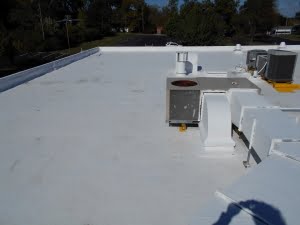
A thorough inspection covers more ground than a walk across the roof. It includes a close look at membrane condition across the full surface, not just the areas near rooftop equipment. Seams and flashing get checked individually, since a single failed seam can be the entry point for an entire section of water damage. Drains and scuppers are cleared and tested to confirm water actually leaves the roof rather than pooling near an outlet that looks clear.
For Bismarck’s climate, twice yearly inspections in spring and fall catch the two periods when the roof takes the most stress. A company that documents what it finds on each visit gives a property manager an actual record of how the roof is aging, rather than a guess.
Protecting Your Bismarck Roof Investment
A commercial roof is one of the largest single assets on a property, and one of the easiest to overlook until something goes wrong. Regular inspection and prompt attention to the warning signs above separate a roof that lasts its full lifespan from one that needs early replacement.
For expert support for commercial roofs in Bismarck, ND contact Eagle Eye Roofing Systems at 701-202-7280 today.
FAQ
How can I tell if my roof has a small problem before it turns into an emergency?
Look for ponding water that has not drained within two days, soft spots on the membrane, or staining on interior ceilings near the roofline. Any of these is worth a professional look even without an active leak.
Is it normal for water to pool on a flat commercial roof?
A small amount of temporary ponding after heavy rain can be normal on some systems, but water still sitting after 48 hours usually points to a drainage issue or a low spot that needs attention.
How often should a commercial roof actually be inspected?
Twice a year is standard for North Dakota’s climate, once in spring after the snow melts and once in fall before winter sets in, plus a check after any major storm.