
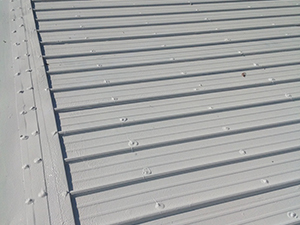
Planning a standing seam metal roof for a commercial or industrial building in New Town, ND, involves more decisions than most facility managers expect before the first panel goes up. Slope, insulation, panel width, snow load engineering, and drainage design all need to be resolved before installation begins and getting them right determines how the system performs across decades of North Dakota winters.
At Eagle Eye Roofing Systems, we help commercial and industrial building owners across North Dakota think through these decisions from the start. Call us at 701-202-7280 to talk through what your building actually needs.
This article covers the key planning decisions specific to commercial and industrial applications in North Dakota. Standing seam delivers long-term performance, but only when the planning behind it matches the building and the region.
Snow Country and a Standing Seam Metal Roof
North Dakota ground snow loads rank among the highest in the country, and a commercial standing seam system has to be engineered to carry that weight without transferring stress to the seams or fasteners. The structural panels used on commercial and industrial buildings are designed with floating clip systems that allow each panel to move independently as temperatures swing. That thermal accommodation matters in a climate where rooftop temperatures can shift 80 degrees or more between a January night and a July afternoon. Before installation begins, the building’s structural capacity and the panel system’s load ratings need to be verified against site-specific snow load requirements for this part of North Dakota.
Slope is the other foundational decision. Structural standing seam panels can be installed on commercial roofs as low as a quarter inch per foot, which makes them viable for the low-slope industrial buildings common across the region. At lower slopes, panel length management and drainage design become more critical because water and snowmelt need a clear, unobstructed path to the eaves. Identifying drainage constraints early prevents ponding issues that undermine the system’s long-term performance regardless of the panel quality.
Panel Width and Seam Height
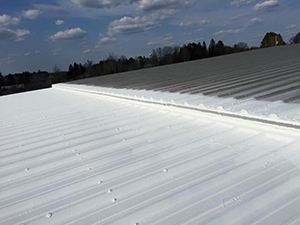
Panel width and seam height are not aesthetic choices on a commercial standing seam metal roof. They are performance specifications. Wider panels reduce seam count across a large commercial or industrial roof footprint, which means fewer potential failure points and a cleaner installation on buildings with significant square footage. Seam height determines how much water and wind-driven snow the raised seam can deflect before moisture finds a path through. On a North Dakota commercial roof where wind-driven snow is a seasonal reality, a taller seam profile provides a meaningful margin of protection that a low-profile seam does not.
Common commercial panel widths run from 12 to 18 inches, with wider panels generally favored on larger industrial footprints to reduce labor time and seam frequency. The right combination of panel width and seam height for a specific building depends on the roof geometry, the slope, and the expected weather exposure at the site. A contractor who proposes the same panel spec for every building regardless of these variables is not tailoring the system to the actual conditions.
Insulation and the Standing Seam Assembly
A standing seam metal roof on a commercial building is a system, not just a metal skin. The insulation assembly beneath the panels determines thermal performance, condensation control, and how much of North Dakota’s heating season costs the building owner is absorbing through the roof. For commercial and industrial buildings in this climate, rigid insulation boards are typically installed above the deck to minimize thermal bridging through the structural framing. The target R-value for the assembly needs to account for the building’s use, interior humidity levels, and the heating demands of a North Dakota winter.
Vapor management is a related consideration that gets less attention than it deserves. Industrial facilities with high interior humidity, wash bays, or process operations that generate moisture need a roof assembly designed to handle that vapor load without condensation forming within the insulation layer. Getting the insulation type, thickness, and vapor control layer right at the planning stage is far simpler than addressing condensation damage after the roof is installed.
Standing Seam Metal Roof Experts
The planning decisions behind a commercial or industrial standing seam metal roof are what separate a system that performs for 40-plus years from one that creates problems within the first decade. Slope, snow load engineering, panel spec, and insulation assembly all need to be resolved before installation starts. At Eagle Eye Roofing Systems, we work with commercial and industrial building owners across New Town, ND, to get those details right from the beginning. Call us at 701-202-7280 and let us walk through what your building requires before the first panel goes up.
FAQ
Do commercial standing seam panels require a specific underlayment in cold climates?
Yes, a self-adhering ice and water barrier is typically required at eaves and valleys to protect against ice dam infiltration on North Dakota commercial roofs.
Can a standing seam metal roof be installed over an existing commercial roof?
In some cases yes, provided the existing deck is structurally sound and the added assembly weight is within the building’s load capacity.
How does wind uplift factor into a commercial standing seam installation?
Clip spacing and fastener schedules are engineered to meet local wind uplift requirements, which in exposed North Dakota locations can be significant.
Is standing seam compatible with rooftop equipment common in industrial buildings?
Yes, pipe penetrations and equipment curbs can be detailed and flashed into a standing seam system without compromising the concealed fastener integrity.