
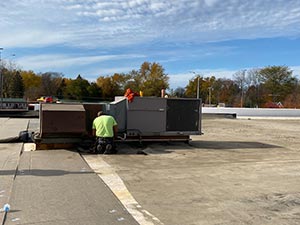
Commercial roofers working in New Town, ND face weather conditions that demand a higher level of expertise. Sub-zero temperatures, extreme thermal cycling, high winds, and heavy snow loads all create installation and material challenges that require experience specific to North Dakota’s climate. Roofing systems that are not properly specified or installed often fail early under these conditions.
For related commercial roofing guidance in New Town, see roof restoration in New Town.
Eagle Eye Roofing Systems installs and repairs commercial roofs for properties in New Town, ND. Call 701-202-7280 to work with commercial roofers who understand how to build roofing systems that perform reliably through North Dakota winters.
How Commercial Roofers Handle North Dakota Weather
North Dakota weather is not forgiving to commercial roofing systems. Contractors who treat every climate the same install roofs that fail within years rather than decades. The difference shows up in material selection, installation technique, and understanding which roofing systems perform in extreme cold.
Commercial roofers familiar with North Dakota understand that material flexibility at low temperatures is not optional. Single-ply membranes like TPO and PVC become brittle when temperatures drop below zero. EPDM maintains flexibility in extreme cold, which is why experienced North Dakota contractors specify it for buildings that cannot tolerate membrane cracking during winter thermal stress.
Installation timing is equally critical. Adhesives, sealants, and coating systems all have minimum application temperatures. A contractor who ignores those limits installs a roof that never achieves proper bond strength. Cold-weather installation requires heated work areas, temperature monitoring, and sometimes specialized cold-weather materials that cost more but actually cure properly in North Dakota conditions.
Thermal movement is extreme in North Dakota. A commercial roof experiences temperature swings of 100 degrees or more between summer highs and winter lows. Metal expands and contracts significantly across that range. Membrane systems stress at seams. Fasteners work loose. Commercial roofers who understand this design details that accommodate movement rather than fight it.
Snow Load and Wind Considerations
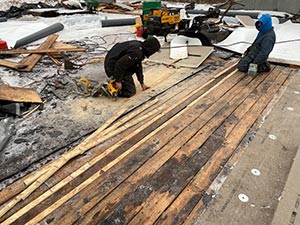
North Dakota building codes specify minimum snow load requirements, but commercial roofers worth hiring design for actual conditions rather than minimums. Heavy snow accumulation creates sustained roof loads that stress structural components. Drifting concentrates snow in specific areas, creating localized overload conditions that exceed design calculations.
Wind uplift is the other constant threat. North Dakota wind events generate forces that tear improperly fastened roofing systems off buildings. Mechanical fastening patterns, attachment density, and edge detailing all matter when wind speeds hit 70 miles per hour. Commercial roofers experienced in North Dakota conditions do not cut corners on fastening schedules.
Ice dam formation on commercial buildings is common where heat loss through the roof deck melts snow that refreezes at colder roof edges. Commercial roofers prevent this through proper insulation installation, air sealing, and ventilation design that keeps the roof deck cold. Buildings with chronic ice dam problems usually have installation defects that a qualified contractor would have prevented.
Material Selection By Commercial Roofers
Spray polyurethane foam roofing systems perform well in North Dakota because the foam provides both insulation and waterproofing in a seamless application. The material handles thermal cycling without cracking. Metal roofing on commercial buildings needs proper specification with standing seam systems and floating clips that accommodate thermal movement. Modified bitumen systems work when installed correctly with experienced crews who understand temperature effects on material flow.
Installation Standards for North Dakota Commercial Roofs
Commercial roofers working in North Dakota follow manufacturer specifications with added attention to climate-specific requirements. Insulation must be mechanically fastened with attachment density appropriate for local wind uplift zones. Membrane seams need proper overlap and welding temperatures that account for ambient conditions. Edge details require robust termination that survives wind events.
Quality control during installation catches problems before they become roof failures. Seam testing, fastener pull tests, and moisture surveys all verify that installation meets standards. Contractors who skip these steps install roofs that look fine initially but fail prematurely when North Dakota weather exposes the installation defects.
Work with Commercial Roofers Who Understand North Dakota
If your commercial building in New Town, ND needs roofing work from contractors who understand what North Dakota weather demands, material selection and installation standards matter just as much as experience. In a climate defined by extreme cold, wind, and snow, the right approach is what separates a roof that performs from one that fails early.
Eagle Eye Roofing Systems installs commercial roofing systems for properties in New Town, ND. Call 701-202-7280 to work with commercial roofers who know how to build roofs that hold up in North Dakota conditions.
FAQ
What roofing materials work best in North Dakota’s extreme cold?
EPDM, spray foam, and properly specified metal systems all perform well in extreme cold when installed by experienced contractors who understand low-temperature material behavior.
Can commercial roofs be installed during North Dakota winters?
Some systems can be installed in cold weather using heated work areas and cold-weather materials, but most commercial roofing work is scheduled for warmer months when installation conditions are optimal.
How do North Dakota commercial roofers prevent ice dams?
Proper insulation installation, air sealing, and ventilation design keep the roof deck cold, preventing the heat loss that causes snow melt and ice dam formation at roof edges.
What wind speeds do North Dakota commercial roofs need to withstand?
Building codes specify minimum wind resistance, but experienced contractors design for actual wind events that can exceed 70 miles per hour in North Dakota.