
Metal roofs are built to last. They handle brutal winters, punishing hail, and decades of freeze-thaw cycles better than almost any other roofing material. But even the toughest metal roof has a vulnerability: rust. For property owners in Steele, ND, where harsh weather and moisture fluctuations are a way of life, understanding how rust develops and how to stop it through professional metal roof restoration can mean the difference between a roof that lasts 50 years and one that fails at 20.
Want to get the most from your metal roof? Contact Eagle Eye Roofing Systems today at 701-202-7280 and schedule a consultation.
Stop the Rust Before It Starts: A Guide to Metal Roof Restoration
Rust forms when iron-containing metals are exposed to oxygen and moisture over time. On a metal roof, the process is accelerated by standing water, scratched or worn protective coatings, and the repeated expansion and contraction that comes with North Dakota’s extreme temperature swings. Fastener points and panel seams are especially vulnerable because they experience the most movement and are often the first places where protective coatings break down.
Left unchecked, surface rust penetrates deeper into the metal, weakening the structural integrity of the panels and eventually creating leaks. By the time water is getting inside, the damage is already significant, and the repair costs have multiplied.
The Case for Restoration Over Replacement
Many property owners assume that a rusting metal roof means a full replacement is inevitable. That assumption is expensive and often wrong. Metal roof restoration is a proven process that addresses rust, seals vulnerabilities, and applies a fresh protective coating system, extending the life of the existing roof by 15 to 25 years in many cases.
Compared to a full tear-off and replacement, restoration typically costs significantly less, generates far less waste, and can often be completed without disrupting the building’s occupants. For commercial properties, agricultural buildings, and homes throughout the Steele area, restoration is frequently the smarter financial decision when the underlying structure is still sound.
How the Restoration Process Works
Professional metal roof restoration follows a systematic process designed to address existing damage and prevent future deterioration.
Inspection and Assessment
The process begins with a thorough inspection to evaluate the extent of rust, coating failure, fastener condition, and any areas of standing water or ponding. This assessment determines whether the roof is a candidate for restoration or whether localized sections require repair before the restoration can proceed.
Surface Preparation
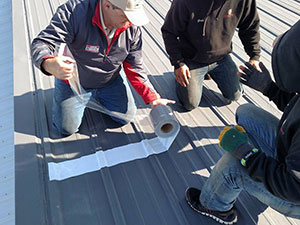
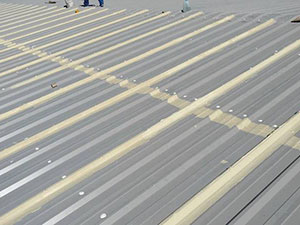
Proper surface prep is the foundation of a successful restoration. Rust is treated and neutralized, loose or peeling coatings are removed, and the entire surface is cleaned to ensure proper adhesion. Fasteners are checked and replaced or re-driven as needed. Seams and penetrations are re-sealed with appropriate materials.
Primer Application
A rust-inhibitive primer is applied to the prepared surface. This step is critical because it creates a chemical barrier that slows oxidation and improves the bond between the metal and the topcoat system.
Coating Application
A high-performance elastomeric or metal roof coating is applied over the primed surface. These coatings are formulated to flex with the metal through temperature changes, reflect UV radiation, and provide a waterproof barrier across the entire roof plane. In North Dakota’s climate, selecting a coating rated for extreme temperature performance is essential.
Final Inspection
Once the coating has cured, a final walkthrough confirms full coverage, proper mil thickness, and that all seams, fasteners, and penetrations are properly sealed.
When to Act
The best time to invest in metal roof restoration is before serious rust sets in. Early warning signs include fading or chalking of the existing coating, visible surface oxidation or staining on interior ceilings, fasteners that appear loose or corroded, and minor leaks that seem to come and go. Addressing these signs early dramatically reduces the scope and cost of the restoration work.
Property owners in Steele, ND should plan for periodic professional inspections, particularly after severe storm seasons, to catch developing issues before they become costly problems.
Metal Roof Restoration: Protecting Your Investment
A metal roof is one of the most durable and valuable components of any building. With the right restoration approach and a qualified roofing contractor, it can continue performing for decades beyond its initial service life. Eagle Eye Roofing Systems works with property owners across the Steele, ND area to assess, restore, and protect metal roofs before rust and weathering take a lasting toll.
If your metal roof shows signs of wear, do not wait for a leak to tell you what a professional inspection could reveal today, call 701-202-7280 and speak with an expert today.
FAQ
How long does a metal roof restoration coating typically last?
Most professional-grade coatings last 10 to 20 years depending on product quality, application, and climate. In North Dakota’s extreme conditions, selecting a coating rated for temperature performance and scheduling routine inspections helps maximize that service life.
Can restoration be done on a metal roof that already has active leaks?
In many cases, yes. Active leaks are addressed during surface preparation by resealing seams, replacing fasteners, and patching problem areas before the coating is applied. If leaks have caused structural damage to the decking or supports, those issues must be resolved first.
Does a restored metal roof require any ongoing maintenance?
Restoration reduces the maintenance burden but does not eliminate it. Inspections every one to two years are recommended to check coating integrity, fastener condition, and seam performance. Addressing minor issues promptly will protect the restoration investment over the long term.