
For a commercial building in Fargo, ND, roof leak detection should do more than identify a wet ceiling or visible roof defect. It should leave the owner with evidence showing where the problem is, what remains uncertain, and whether the next step is maintenance, repair, additional investigation, or replacement planning.
Eagle Eye Roofing Systems provides commercial roof inspections for Fargo-area buildings. To discuss a roof leak or arrange an inspection, call (701) 202-7280.
Signs, Symptoms, and Solutions for Commercial Roof Leak Detection
Monitoring a building for roof leaks is an ongoing process. Interior signs can point to areas that need investigation, but they do not prove the exact roof entry point.
What Are the Warning Signs of Commercial Roof Leaks?
Interior signs. Conditions that may justify closer review include:
- Discolored ceiling areas
- Peeling paint or bubbling wall finishes
- Musty odors in poorly ventilated areas
- Warped or buckled flooring near exterior walls
- Soft ceiling tiles
- Dripping during rain or spring snowmelt
Exterior signs. A professional roof inspection may find:
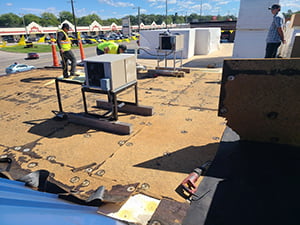
- Damaged or lifted flashing around HVAC units and penetrations
- Water remaining after surrounding roof areas have drained
- Blocked drains, gutters, or downspouts
- Visible membrane tears, punctures, or open seams
Water can travel along decking, insulation, or other roof components before it appears inside the building. That means an interior stain may be several feet from the actual entry point. Treat the symptom as evidence to investigate, not as a diagnosis of the leak source.
What a Leak Detection Report Should Include
A useful report should separate confirmed observations from unresolved conditions. The owner should be able to hand the report to a contractor, property manager, insurer, or decision-maker and understand what was found and what still needs follow-up.
| Report Item | What It Should Show | Why It Matters |
|---|---|---|
| Scope and conditions | Inspection date, weather, access limitations, and the roof areas reviewed | Defines what the inspection did and did not cover |
| Dated photos | Interior symptoms and roof findings identified by location when practical | Creates a record for later comparison and estimating |
| Defect locations | The roof areas, seams, flashing, penetrations, drains, or membrane defects associated with the investigation | Helps define where repair or additional investigation should focus |
| Moisture limitations | What visible inspection establishes and which concealed conditions remain unknown | Prevents uncertain moisture conditions from being treated as confirmed damage |
| Prioritized actions | Items separated into prompt repair, planned work, monitoring, or further investigation | Turns findings into a practical decision sequence |
| Reinspection triggers | Conditions such as another leak, significant weather, completed repairs, or a documented change in condition | Shows when another review is justified without relying on one fixed interval |
Thermal and Moisture Findings
Thermal imaging or electronic moisture detection may be used on some commercial roof investigations. These methods can identify areas that deserve closer attention, but the result should be treated as screening evidence rather than proof of a leak path or concealed wet insulation by itself.
If a thermal or electronic finding could change the repair or replacement scope, the report should state whether confirmation is needed and what project-specific follow-up is appropriate. The confirmation method depends on the roof system, access, suspected condition, and the decision being made. Eagle Eye should not be represented as providing a specific detection technology unless that capability is confirmed for the project.
Commercial Roof Maintenance Scheduling
Commercial roofs should be inspected on a schedule that reflects roof condition, repair history, rooftop activity, weather exposure, and any written maintenance requirements. Additional inspection may be appropriate after significant Fargo weather or when a leak, stain, drainage problem, or other new symptom appears.
Keeping inspection reports over time also helps show whether the same area is recurring or whether a new problem has developed.
Immediate Commercial Roof Leak Solutions
If water is entering the building, focus first on safe interior actions while arranging a professional roof assessment:
- Use containers to control active dripping where it is safe to do so.
- Move equipment, inventory, and other vulnerable items away from the affected area.
- Take dated photos of interior damage and visible conditions.
- Keep staff away from wet electrical equipment, unstable ceiling materials, and unsafe areas.
- Contact a commercial roofing contractor for roof-level investigation. Do not walk on a wet, icy, or snow-covered roof yourself.
Professional Commercial Roof Repair Options
A localized defect may be repairable with compatible flashing work, membrane repair, or another limited repair method. Broader moisture, repeated leaks, or widespread membrane deterioration may require a larger scope. If the evidence supports replacement planning, see Eagle Eye’s Fargo roof replacement information.
If the leak follows significant weather, a separate storm damage assessment can help document weather-related conditions. The inspection report should still distinguish observed damage from assumptions about cause.
How the Report Supports a Scoped Estimate
The report should go to the person responsible for approving roof work and budget. That may be the owner, facility manager, property manager, or another designated decision-maker.
A contractor can then use the documented findings to prepare a scoped estimate identifying the affected areas, proposed repairs, important exclusions, and any unresolved condition that could change the scope. A good report does not automatically decide that repair or replacement is required. It shows what evidence supports the proposed next step.
Long-Term Commercial Roof Protection Strategies
Preventive maintenance can reduce avoidable deterioration and help identify problems before they become larger, but it cannot eliminate every future leak. Useful practices include keeping inspection records, addressing confirmed defects promptly, maintaining drainage, and tracking recurring conditions so the next inspection begins with useful history.
Roof Leak Detection Professionals
Commercial roof leak detection in Fargo, ND should result in more than a suspected source. It should produce a clear record of the symptoms, roof findings, limitations, priorities, and next steps. To discuss a commercial roof inspection with Eagle Eye Roofing Systems, call (701) 202-7280.
Frequently Asked Questions
What should a commercial roof leak detection report include?
It should include dated photos, defect locations, inspection limitations, moisture uncertainties, prioritized actions, and clear triggers for reinspection or additional investigation.
Can I inspect a commercial roof leak myself?
You can document interior symptoms and visible conditions from safe locations. Roof access and leak-source investigation should be left to trained roofing personnel.
How long does a commercial roof leak repair take?
Timing depends on the roof system, damage extent, moisture conditions, access, repair method, materials, and weather. A schedule should follow the inspection and defined repair scope.
Will business insurance cover roof leak damage?
Coverage depends on the policy and the cause of loss. Keep dated photos and inspection records, then ask your insurer which documentation and coverage provisions apply.